


If you held Bitcoin in cold storage through late May and early June 2026, the wallet's display went unchanged. The Bitcoin amount stayed the same. The dollar value moved as the market moved, but the count of BTC sitting at your address held steady. The wallet didn't react. The wallet doesn't react.
Hot wallet holders had a different experience. Software wallets on phones push notifications, show balance changes in USD, surface "buy" and "sell" options that take a tap to act on. Exchange app holders had it worse: the entire interface is built around making transactions easy.
The structural difference between cold and hot during a volatile period runs through the question of whether the price-of-the-day reaches you, and whether the act of selling is one tap or twenty.
This piece walks through what happened to Bitcoin price-wise in the past two weeks, what the same period looked like for cold-storage holders versus hot-wallet holders, and why the design choice underneath a hardware wallet is the friction that matters most.
What the price did
- May 22: ~$71,500 local high
- June 2: ~$59,100 trough (18% off the high)
- June 11: ~$63,400 partial recovery
- 13 consecutive days of spot Bitcoin ETF outflows totaling $4.37B
The drawdown was driven by a combination of macro positioning (rate-cut delays, dollar strength), ETF redemption flows (the cycle's largest), and a handful of corporate de-risking moves (most notably Fold's $45M sale at $71K).
For an exchange holder watching the order book, this was a stressful two weeks. For a cold storage holder who didn't open the wallet app, it was unremarkable.
What attention does to portfolio behavior
Behavioral finance research is unambiguous on this point: investors who check their portfolios more often make more changes, and those changes typically reduce returns. The studies cover decades of mutual fund data, stock investing patterns, and (more recently) crypto holding behavior.
The mechanism is direct. Frequent checking means more opportunities to see negative price action. Negative price action triggers loss aversion. Loss aversion produces sell decisions that are difficult to reverse when conditions change.
For Bitcoin specifically, the holders who check infrequently consistently outperform the holders who check daily, even when both are buying-and-holding the same asset. The difference is the panic sells the frequent checkers make during drawdowns.
How hardware wallets change the math
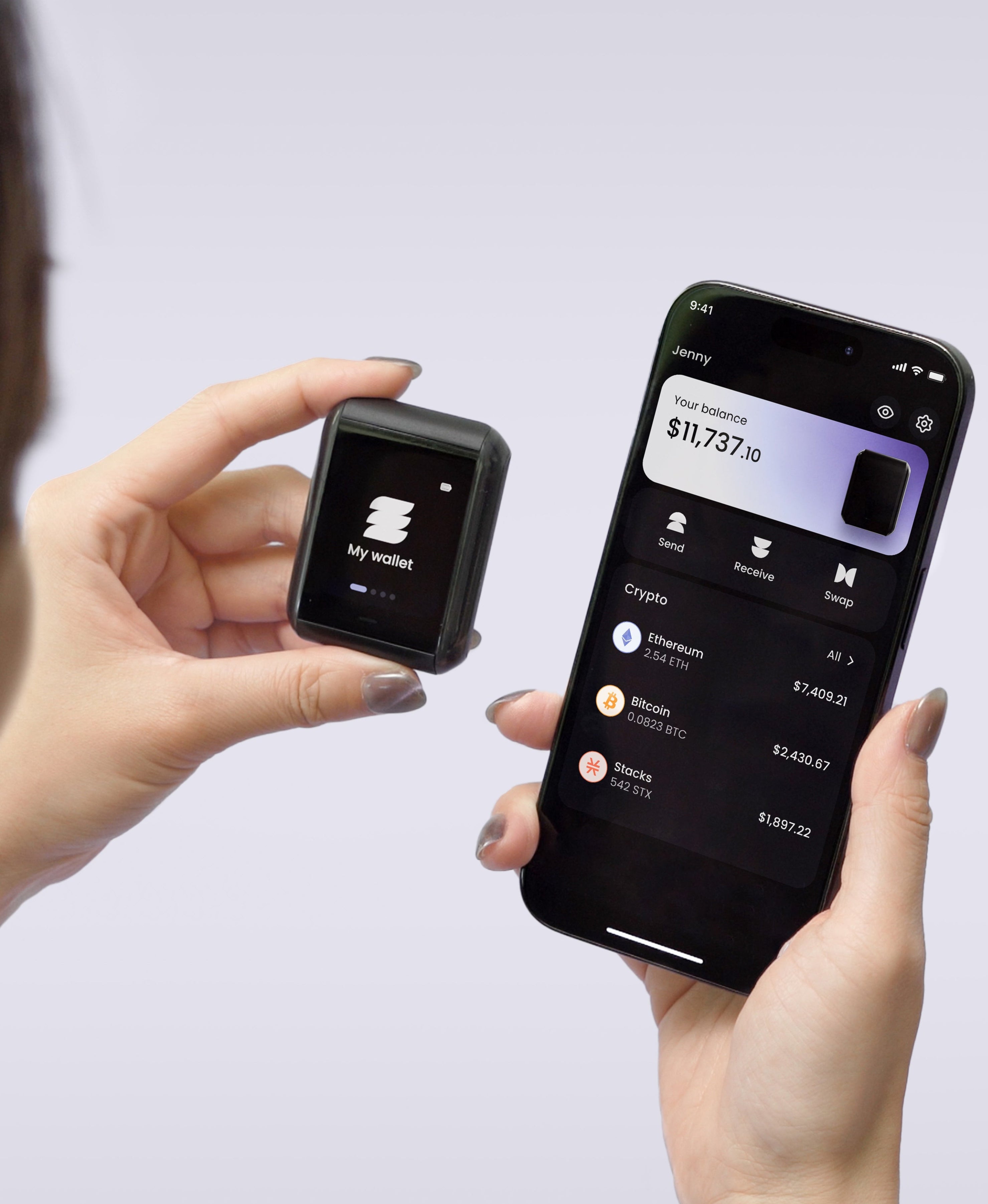
A hardware wallet doesn't have a screen showing your balance. It doesn't push notifications. It doesn't open by accident. The wallet exists in the physical world as a small device in a drawer, and it requires deliberate effort to interact with.
The companion app on your phone does show balances, but the friction of opening the app is intentional: you have to want to see the balance to see it. Many cold-storage holders deliberately don't put the companion app on their home screen.
The cumulative effect across a multi-year holding period is fewer checking events, fewer reactions to price moves, fewer sell decisions made under emotional pressure.
The Bitcoin sitting on a hardware wallet is the same Bitcoin that would be sitting on an exchange. What changes is the holder's relationship to it.
Where Ryder One fits
Ryder One is built around this design choice. The EAL6+ Infineon SLC38 secure element holds the private key offline. Every transaction is verified on the device's 1.6-inch AMOLED touchscreen with a physical button press. The wallet doesn't push notifications, doesn't surface a balance unless you open the app, and doesn't reach you during your morning scroll.
TapSafe Recovery handles the backup question so the friction doesn't create fragility: 50% on a Recovery Tag, 50% in your phone's iCloud or Google Drive backup, optional 25% per Recovery Contact.
The bottom line
Bitcoin moved 18% in five days during the past two weeks. Holders on hardware wallets didn't notice because the wallet doesn't ask them to notice. Holders on exchanges and software wallets did notice because the app does ask. The design choice is small in any single moment and large over a multi-year horizon. For holders who recognize their own tendency to react to short-term price moves, the friction a hardware wallet adds is a feature working in your favor.
Buy the device. Forget the device. Hold the position. Ryder One keeps your Bitcoin offline on an EAL6+ secure element, with TapSafe Recovery as the backup. The wallet doesn't watch the chart. You decide when to engage with it. See how it works.


Share: