


US spot Bitcoin ETFs bled $3.4 billion in net outflows during a single week in early June 2026: the biggest weekly exodus since the funds launched in January 2024. The streak ran 13 consecutive trading days, drained $4.37 billion in total, and flipped the year's cumulative flows negative for the first time.
BlackRock's IBIT took the brunt: $3.3 billion of the outflows, or roughly 75% of the total. Fidelity's FBTC lost $456 million. Total assets across all US spot Bitcoin ETFs fell from $104 billion on May 15 to $83 billion on June 3.
The question worth asking is where the money went.
This piece walks through what the June ETF exodus looked like, where the money flowed when it left the funds, and how the picture changes if you map the outflows against retail self-custody trends.
The numbers
The 13-day streak is the longest sustained outflow period in the spot Bitcoin ETF's history. Some specifics:
- May 15 to June 3, 2026: 13 consecutive trading days of net outflows
- Total drained: $4.37 billion
- IBIT (BlackRock): $3.3 billion lost
- FBTC (Fidelity): $456 million lost
- GBTC (Grayscale): $303 million lost (separate from earlier conversion-related selling)
- Year-to-date flows: flipped from positive to negative for the first time since the products launched January 2024
This came in parallel with Bitcoin's price drop from $71K to $59K. ETFs respond to redemption demand, and redemption demand tends to spike when prices fall.
Where the money went
When ETF investors redeem, the fund returns cash to the redeeming party. The party that received the cash chooses what to do with it. Three paths cover most of the flow.
Path 1: Back to cash. Some redeemers exit Bitcoin exposure. They sell the ETF, take the cash, and sit on it. This is the path for investors who decided Bitcoin's risk profile wasn't what they signed up for.
Path 2: Into direct custody. A portion of the outflow rotates from ETF exposure (which carries 0.2 to 0.3% annual expense ratio plus custodian counterparty risk) into direct custody (which has neither). For long-term holders, the cost of running self-custody (a one-time hardware wallet purchase, plus operational time) is far less than the perpetual expense ratio of an ETF, and the custody arrangement is structurally different.
Path 3: Into different exposure. Some redeemers rotate from spot ETFs into Bitcoin mining stocks (MARA, RIOT), Bitcoin treasury equities (MSTR, FLD), or directly into Bitcoin via on-ramp providers. The exposure stays in Bitcoin-adjacent assets but moves out of the ETF wrapper.
The mix between these paths can be inferred from on-chain data and from related-asset flows. On-chain inflows to known self-custody addresses during the June drawdown were measurable, suggesting Path 2 captured a meaningful share. Bitcoin mining and treasury stocks saw mixed flows, with MSTR holding up while smaller treasury companies (like Fold) re-rated. Cash exits showed up in the broader equity market's relative performance.
What the rotation tells you
For investors deciding whether to hold Bitcoin via ETF or via self-custody, the calculus shifted slightly during June.
The ETF wrapper has clear advantages: regulated, tax-reportable, accessible through any brokerage, no key management. Those advantages haven't changed.
The ETF wrapper also has costs that compound. The expense ratio (0.2 to 0.3% per year) is small in any single year and large over a decade. The counterparty risk (the ETF's custodian holds the Bitcoin) is small but real. The lack of programmable spending (you can't move Bitcoin out of an ETF to use it on-chain) is a constraint that matters more as on-chain use cases grow.
For investors who want the convenience and are happy with the trade-offs, the ETF is fine. For investors who don't want the ongoing fee, the counterparty layer, or the limitation to financial use only, the rotation to self-custody is the answer.
Where Ryder One fits
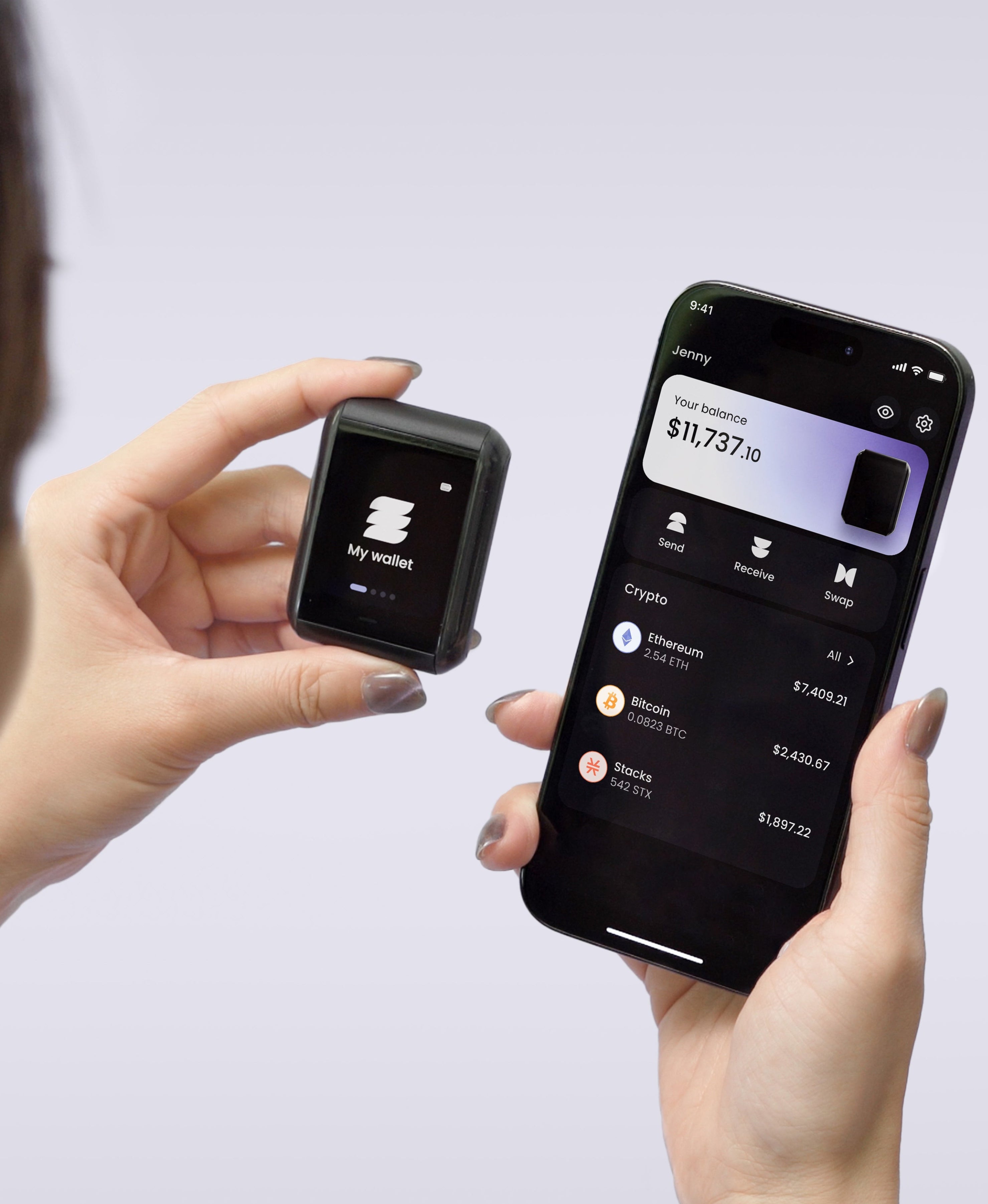
Ryder One is the self-custody endpoint for the ETF rotation. The EAL6+ Infineon SLC38 secure element holds the private key offline. The wallet supports Bitcoin natively, with every transaction verified on the device's 1.6-inch AMOLED touchscreen and signed with a physical button press. TapSafe Recovery splits the backup across hardware and people you trust.
For holders rotating out of IBIT or FBTC, the technical migration is well-defined: redeem the ETF for cash, buy Bitcoin through any spot exchange or directly through Ryder One's MoonPay integration, and the funds land on the device. No ongoing fee, no custodian, no expense ratio.
The bottom line
The June 2026 ETF outflow streak ($4.37 billion over 13 days) is the largest sustained redemption period in the spot Bitcoin ETF's history. Some of the redeemed capital went back to cash; some rotated into Bitcoin-adjacent equities; some moved into direct self-custody. The mix matters because it tells you what kind of holder the ETF was attracting (financialized exposure) versus what kind of holder leaves when conditions get rough (the ones who decide the ongoing fees and the counterparty layer aren't worth it). For investors deciding between an ETF and direct custody today, the math has tilted slightly in favor of direct custody.
Hold Bitcoin without the expense ratio. Ryder One keeps your BTC offline on an EAL6+ secure element, with TapSafe Recovery as the backup. One-time purchase, no annual fees, no custodian. See how it works.



Share: