

AI-powered attacks against crypto wallets crossed a few thresholds in early 2026. Phishing losses jumped 207% in January 2026 compared to December 2025, with the new attacks using deepfake voices, generative video, and language models to handle volume that a human operator couldn't sustain. Security researchers documented 26 malicious LLM router services that intercept AI agent traffic, with one case draining a researcher's wallet of 500,000 USD by injecting code into tool calls. The mechanics underneath haven't changed. Wallets still hold private keys. Transactions still require signatures. What changed is the speed and personalization at which attackers can reach individual targets, plus the new class of attacks that comes from AI agents operating with wallet access on a user's behalf. This piece walks through what's new about AI-powered crypto attacks in 2026, what defenses still hold up against them, and what holders should do today.
What's new in 2026 AI-powered crypto attacks
Three patterns showed up at scale this year. Generative phishing. Mass phishing used to be limited by the writer. Generic email templates, broken English, and obvious bait kept the conversion rate low. Modern language models write convincing personalized copy at scale, with each phishing message tuned to the target's specific wallet history, project interests, and recent on-chain activity. The 207% January 2026 spike in phishing losses traces back to this category. Deepfake support. Attackers using voice cloning and generative video can impersonate project staff, exchange support agents, or even friends and family in convincing calls. The user gets what feels like a real support interaction asking them to share access or sign a transaction. The cost of producing a convincing deepfake dropped through 2025 and into 2026. Malicious LLM routers and AI agent attacks. As AI agents started managing crypto wallets on users' behalf (paying for services, executing trades, interacting with protocols), the routers handling agent communications became a new attack surface. Researchers documented LLM routers injecting malicious code into tool calls, in one case draining 500,000 USD from a live wallet via an unauthorized ETH transfer. The first two are evolutions of attacks that existed before. The third is a new class that didn't exist when AI agents weren't handling wallet operations.
What still defends against this
Three defensive layers hold up against the AI-augmented versions of these attacks, with the strongest setup combining them. On-device transaction verification on a hardware wallet handles the most common AI-attack failure mode: the moment when the user is convinced (by deepfake voice, by generative phishing, by a manipulated AI agent) to sign a transaction they didn't intend. The hardware wallet displays the transaction details on its own screen, and signing requires a physical button press. Whatever the attacker manipulated upstream, the device shows the truth at signing time. Transaction simulators catch the generic patterns at the wallet UI before signing. They flag unlimited approvals, transfers to suspicious destinations, and intent mismatches. They don't catch every novel attack, though they catch enough that drainer operators have shifted toward attacks specifically designed to bypass them. Operational discipline closes the gaps that technology can't. Don't sign transactions you didn't initiate. Don't share access codes or seed phrases with anyone claiming to be support, no matter how convincing the call. Verify any urgent request through a known-good channel before acting on it. For users running AI agents with wallet access, the additional discipline is to use only audited router providers and to set strict spending limits on whatever wallet the agent has signing authority over.
The state-sponsored angle
A meaningful share of 2026 crypto losses traces back to state-sponsored groups, especially DPRK-linked actors. The Drift Protocol exploit in April 2026 (285 million USD) and the KelpDAO exploit (292 million USD) together account for most of 2026's attributed losses, and both are attributed to North Korean threat actors. The Drift attack involved six months of social engineering against the Drift Security Council before any exploit code touched the protocol. For retail holders, the implications are real even though state-sponsored attacks usually target larger pools. The same techniques (long-duration social engineering, AI-augmented impersonation, durable nonce abuse) trickle down to commercial drainer operators over time.
Where Ryder One fits
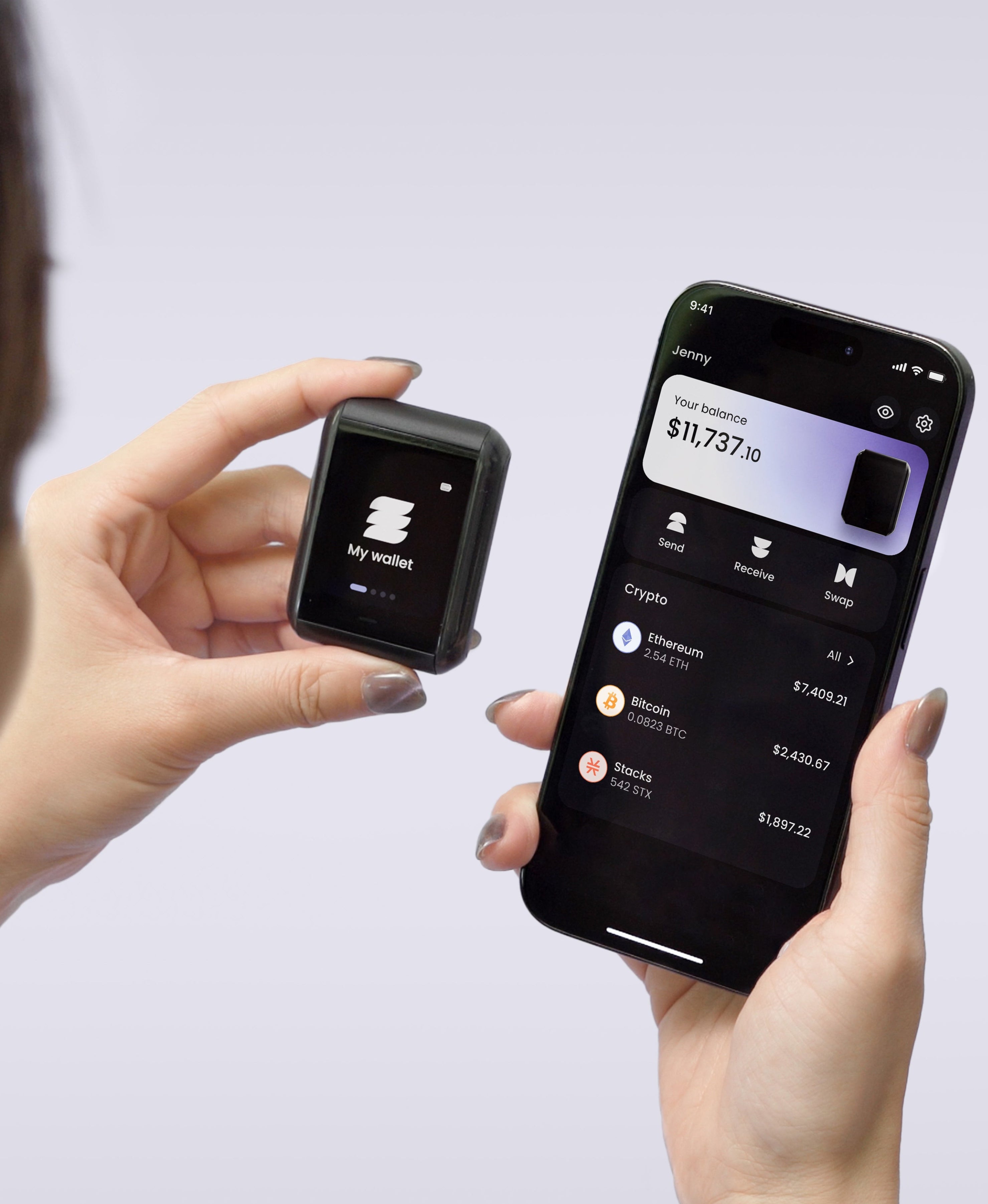
Ryder One is built around the on-device verification layer. Every transaction is verified on the 1.6-inch AMOLED touchscreen, with the physical button wired directly to the EAL6+ secure element. No software path can sign without your deliberate press. AI-powered upstream manipulation doesn't change what the device shows you at signing time. For users running AI agents with crypto access, the Ryder One position is straightforward: keep the long-term holdings on the hardware wallet, give the AI agent access to a hot wallet with strict limits, and pair the two so the agent can't reach the cold position. TapSafe Recovery handles the backup so the structural answer to "what if everything fails" is in place independently of the agent setup.
What to do today
A few practical moves close most of the new exposure. Treat unsolicited communications as suspect, regardless of how legitimate they sound. Voice and video alone are no longer reliable identification. Audit your token approvals. Tools like Revoke.cash let you see what contracts have spending permission on your wallet. Revoke anything you don't recognize. Move long-term positions to cold storage. The wallets at greatest risk are the ones with high balances doing active signing on the same device that gets messages from the outside world. For AI agents handling crypto, use only audited router providers, set transaction limits, and pair the agent's wallet with a separate cold-storage wallet that the agent has no access to.
The bottom line
AI-powered crypto attacks in 2026 are faster, more personalized, and operate on a new layer (agent routing) that didn't exist a year ago. The underlying mechanics of how a wallet gets drained haven't changed: someone has to sign a malicious transaction. The defenses that worked before still work, and the strongest setup combines hardware-wallet on-device verification, transaction simulators at the software layer, and operational discipline about what gets signed.
Sign on a screen the attacker can't touch. Ryder One verifies every transaction on its own display, with a physical button wired directly to the EAL6+ secure element. AI-powered upstream manipulation doesn't change what the device shows you at signing time. See how it works.



Share: