

A British investor who goes by Chris bought bitcoin in 2011 through a small UK exchange called Britcoin, which later renamed itself Intersango. Trouble started in late 2012, the site went dark in early 2014, and his account froze with nobody answering emails. The platform wasn't regulated by the Financial Conduct Authority, so he had almost no route to complain, and after a while he did what most people in that position do. He wrote the money off.
Last week the story finished. Chris got 61 BTC back, worth about 3.3 million pounds, roughly 4.5 million dollars. It's a good outcome and a rare one, and the details of how it happened say more about self-custody than the headline number does.
What getting them back involved
Chris instructed CEL Solicitors in January 2026. The firm assembled bank statements, emails and exchange records stretching back nearly fifteen years to establish that the account and the coins had been his, then prepared court documents for proceedings in the United States, since that was where the claim had to be pressed. Ryan Sweetnam, the firm's director of financial litigation, described the resolution as a negotiation rather than something a judge decided.
The case settled on 28 May 2026, about four months after the lawyers started. Twelve years of silence, four months of litigation preparation, fifteen years of paperwork, and a specialist firm that does this for a living.
Now hold that against the alternative. If those coins had been at an address whose key Chris controlled, the entire recovery would have consisted of finding the words and typing them into a wallet. No solicitor, no discovery, no foreign court, no negotiation, and no twelve-year gap during which the outcome was a coin flip.
The 5,500 bitcoin still sitting there
The part of this story that hasn't finished is larger. CEL Solicitors says roughly 5,500 BTC, on the order of 500 million pounds at current prices, remains connected to former Intersango customers and is held by one of the platform's co-founders, who acknowledged during the litigation that the assets still belong to those customers.
So there are people walking around today who are owed life-changing sums by a company that stopped answering the phone in 2014, and who have no idea. Some of them have thrown away the paperwork. Some of them are dead. The coins are on-chain, visible, and unreachable by the people they belong to, which is a description that fits a depressing amount of the early exchange era.
If you traded on Britcoin or Intersango, or on any small exchange that went quiet rather than formally failing, the useful lesson from Chris is that old records have value. Bank statements showing the transfers in, the confirmation emails, the account name, anything with a date on it. That evidence is what made his claim workable, and it's the difference between a claim you can pursue and a story nobody can verify.
Why this is a paperwork story
Notice what the twelve years turned on. Not cryptography, not a forgotten password, not a lost hard drive in a landfill. The bitcoin was never lost in the technical sense: it sat at an address the whole time, spendable by whoever held the key, which was someone else. What Chris lost was the ability to prove and enforce a claim against a company, and getting it back meant reconstructing that proof in a courtroom on a different continent.
This is the shape of every custodial failure, from a 2014 UK startup to BitMart's restructuring and the exchange collapses in between. The balance you see is a promise. When the promise breaks, you become a creditor, and creditors need lawyers, evidence and patience.
What a key changes
Holding your own keys removes the counterparty entirely, which is the point everyone makes. The quieter benefit is procedural: the question of who owns the coins never has to be answered by anyone else. There's no company to identify you to, no records department to search, no jurisdiction to argue about, and no window during which a decision is pending.
That's also why the honest version of this pitch includes the catch. Taking the keys means the failure modes move to you, and the most common one is not a hack. It's a person who held their own coins correctly for years and then couldn't be found by the people who needed to reach them, or who couldn't reach the coins themselves after a house move, a flood or a stroke.
Your backup is the other half of the story
Written down once and left in a drawer, a set of words carries the same risk profile as Chris's frozen account: everything depends on one thing surviving, and you'll find out whether it did at the worst possible moment. Paper degrades. A stamped metal plate is the standard upgrade and handles fire and water well, though your position still rests on one object staying intact, staying unread by whoever else walks through the house, and staying findable years from now.
TapSafe Recovery removes that single point of failure instead of hardening it. Your recovery splits across a Recovery Tag holding half of what's needed and your paired phone holding the other half, encrypted into your own iCloud or Google Drive rather than sitting on the handset, so losing one piece alone costs you nothing and stealing one piece alone gets a thief nowhere. Recovery Contacts are optional, hold a quarter each, never learn anything about your balances, and are set up in person with a tap, which is the part that answers the "what if I'm not here" question without handing anybody your coins. It runs on a custom implementation of Shamir's Secret Sharing, and the seed phrase remains available on the device as a last resort under the BIP-39 standard, so you keep the escape hatch.
Two things worth doing
First, go through whatever you still hold on exchanges and ask which of those companies would answer an email in 2038. Anything you don't plan to trade this quarter belongs on hardware you control, and moving it takes minutes.
Second, dig out the old records. If you bought bitcoin before 2016 on a platform that no longer exists, the statements and emails from that era are the only thing standing between you and the position 5,500 bitcoin worth of former Intersango customers are in right now. Chris got his back because he could prove they were his.
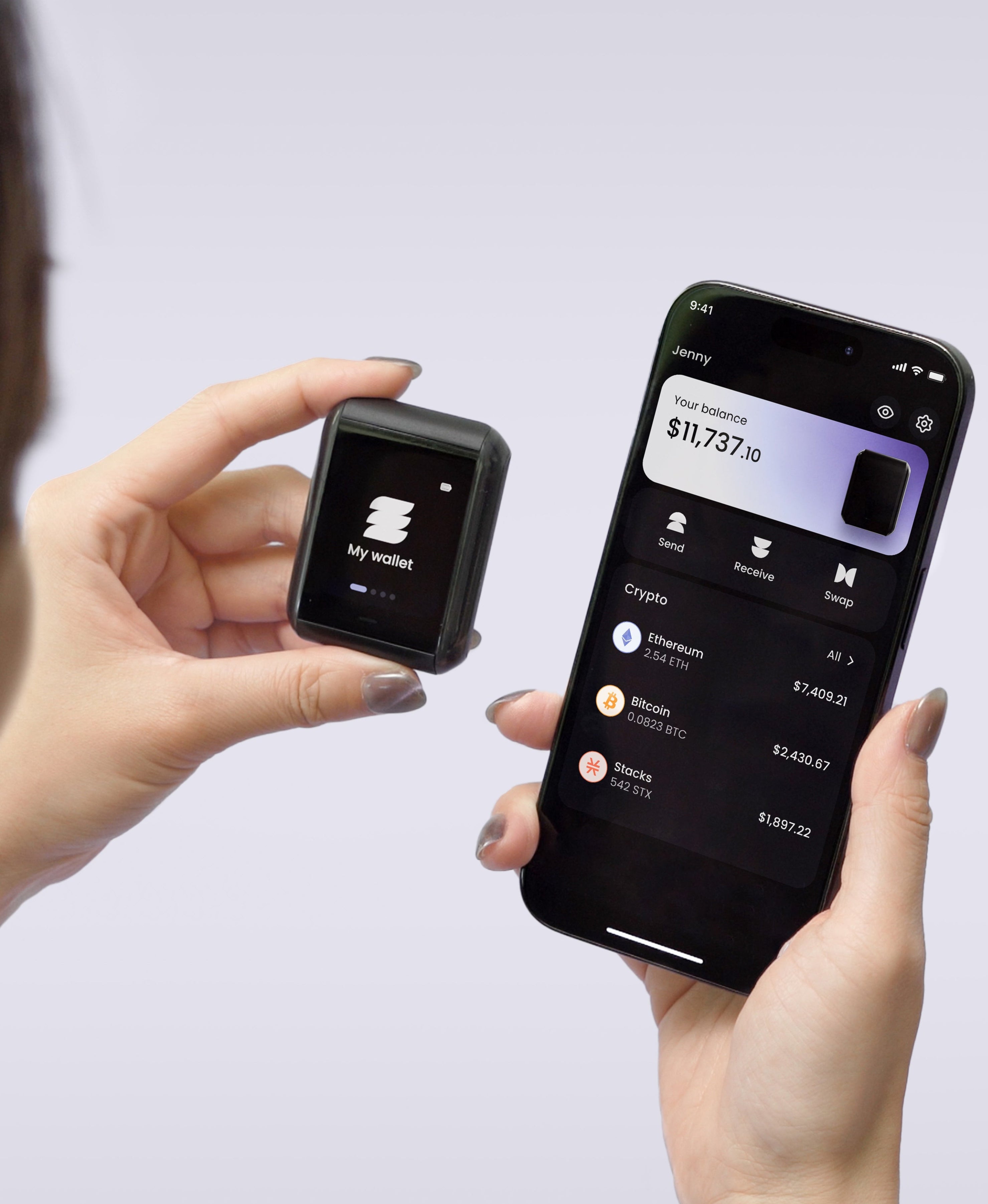
Then close the loop on the part you control. On the Ryder One, setup runs three taps and under a minute, every transaction is drawn in full on the screen before a button wired to the secure element will sign it, and nobody has to look you up in a database to give you your money. Get your Ryder One.


Share: