


As of June 12, 2026, Bitcoin's technical chart is producing 11 bullish signals and 18 bearish signals, per the most commonly tracked technical analysis indicators. That bias toward bearish is the most negative reading since the early 2025 correction, and it sits against a backdrop of $4.4 billion in spot ETF outflows over the prior month.
For traders, the indicator mix matters for short-term position sizing. For everyone else, it's worth understanding what the signals are trying to say and what they explicitly don't say.
This piece walks through what the 18 bearish vs 11 bullish reading measures, which indicators are flashing red, what the historical accuracy of these signals has been, and what hardware wallet holders should take from any technical reading.
What the 11 vs 18 means
Most "technical analysis" overlays for Bitcoin track a defined set of indicators: moving averages (50-day, 200-day), RSI (relative strength index), MACD (moving average convergence divergence), Bollinger Bands, Ichimoku Cloud, ATR (average true range), and others. Each indicator produces a directional signal: bullish, bearish, or neutral.
CoinCodex's "bull/bear" reading aggregates roughly 30 standard indicators and tallies the bullish vs bearish count. As of mid-June 2026, that count sits at 11 bullish, 18 bearish, and the remainder neutral.
Specific bearish signals dominating the reading:
- Bitcoin trading below its 50-day moving average since mid-May
- RSI in the oversold-to-neutral range (45 to 55), suggesting consolidation but no immediate bullish catalyst
- MACD histogram below zero, with a death cross confirmed in early June
- Volume on the recent recovery rallies has been weaker than volume on the preceding decline
Specific bullish signals counter-balancing:
- Long-term moving averages (200-day, 365-day) still slope upward
- On-chain accumulation by long-term holders has continued through the drawdown
- Hash rate near all-time highs (network security strengthening)
- Realized cap (cost basis of all coins) holding above current price for most cohorts
What technical signals do and don't predict
Technical analysis aggregates historical price patterns to suggest future direction. Over long enough samples, the directional bias of an indicator basket has some predictive value for the following weeks. Over shorter samples (days), the noise dominates.
The 11/18 reading suggests near-term downside risk in the way a weather forecast suggests rain. It's a probability rather than a guarantee. Bitcoin has rallied through bearish technical setups before (December 2023, October 2024), and it has continued to fall through bullish setups (May 2022).
What technical signals don't capture: regulatory shifts, ETF flows, macroeconomic surprises, geopolitical events, exchange failures, supply shocks. Any of those can override the chart pattern within days.
For an active trader, the 11/18 mix supports a defensive posture: smaller position size, tighter stops, less leverage. For a long-term holder, the mix is informational but not actionable: you're not selling because the chart is bearish if your thesis is the next 5+ years.
Why this matters for hardware wallet holders
Hardware wallet holders are typically in the second category. The friction of moving funds between cold storage and an exchange is high enough that day-to-day technical signals don't drive trading decisions. The wallet exists to hold positions through cycles, not to support active trading off of TA.
That said, technical readings can inform two specific decisions for self-custody holders:
When to rebalance. If your Bitcoin allocation has drifted significantly above or below target due to price action, a bearish technical setup is a reasonable moment to take some profit and bring the allocation back to target. A bullish setup is a reasonable moment to add.
When to add to a long-term position. Dollar-cost averaging works regardless of technicals. But for lump sum allocation decisions, a bearish technical setup at lower prices is generally a better entry than a bullish technical setup at higher prices.
Both of these are slow decisions that work fine with the friction a hardware wallet adds.
Where Ryder One fits
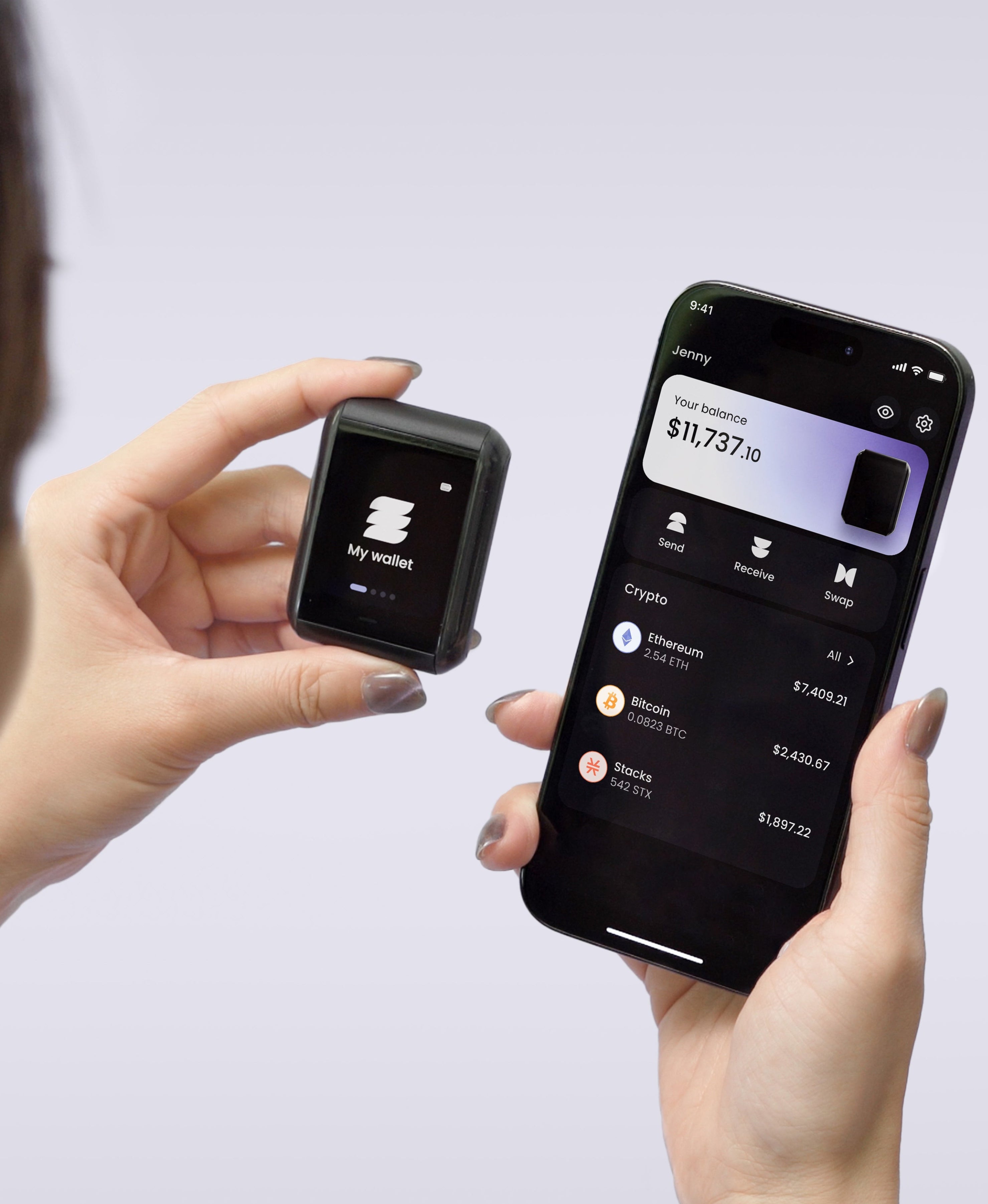
Ryder One holds Bitcoin and other assets on an EAL6+ Infineon SLC38 secure element. The wallet doesn't react to technical signals; it does what you tell it to do whenever you tell it to. For holders who set positions based on cycle math rather than chart patterns, the device gives you the structural insulation to hold through the noise.
TapSafe Recovery handles the backup independently: 50% on a Recovery Tag, 50% in your phone's iCloud or Google Drive backup, optional 25% per Recovery Contact.
The bottom line
Bitcoin's technical chart in June 2026 is bearish (18 indicators vs 11 bullish), reflecting the recent drawdown and the ETF outflow streak. The reading suggests near-term downside risk, though technical signals are weak predictors over multi-year horizons and don't account for the major drivers of crypto prices (regulation, institutional flows, macro). For hardware wallet holders, the indicator mix is informational rather than actionable; for traders, it supports a defensive posture in the short term.
Hold through the noise. Ryder One keeps your Bitcoin offline on an EAL6+ secure element, with TapSafe Recovery as the backup. The wallet doesn't watch the chart. See how it works.



Share: