

- by Louise Ivan
Redefining Hardware in the Web3 Era: Ryder's CPO, Julien
- by Louise Ivan
Julien’s journey spans from Paris to Asia’s prominent tech hubs: Hong Kong, Shenzhen, and Singapore. With over a decade in hardware development, he strives to turn ideas into tangible, loved products. A graduate of ECE Paris, he specialized in Embedded Systems engineering, but his deep-seated passion truly lies in well-built and thoughtfully crafted designs.
In 2016, Julien's journey took a turn when he moved to Hong Kong to be part of a consumer hardware startup, Soundbrenner. Starting as their first engineer at a time when they had no products in the market, he quickly ascended to the role of Head of Product — leading teams of mechanical, firmware, and electronics engineers, and being directly involved with manufacturers in China. Within a few years, he brought products from ideation to mass production, resulting in over 250,000 wearables shipped globally and multi-millions in revenue. Demonstrating his commitment, he even relocated to China amidst the concerns of the COVID-19 pandemic to stay close to his manufacturers. Throughout, his dedication remained to create products that were not only functional but also beautifully designed and loved by customers.
After this impactful experience with Soundbrenner, Julien moved to Singapore to explore different hardware challenges, notably with Transcelestial — a company aiming to deliver internet worldwide through a network of lasers in space. As a Technical Program Manager, he further sharpened his expertise by optimizing product development processes and facilitating productive collaboration among multi-disciplinary teams.
By 2022, Julien had become acquainted with the complexities and challenges of web3 self-custody, having experienced them firsthand since 2017. Noticing that these issues were far from being resolved, he felt the need to take the lead in finding a solution. His determination led him to Louise and Marvin, who had just started Ryder.
At Ryder, Julien doesn't merely see hardware wallets as technical tools. Instead, he views them as embodiments of trust, security, and user-centric design. He strives to make hardware wallets not only secure but also user-friendly, seamlessly merging security with an intuitive user experience and a well-crafted design. He is on a quest to reengineer the very essence of self-custody — making them both secure and inviting.
Join us on Discord, where you can engage directly with Julien to discuss product development, the challenges of crafting a well-designed product, and explore web3 security. Together, let's shape the future of self-custody.
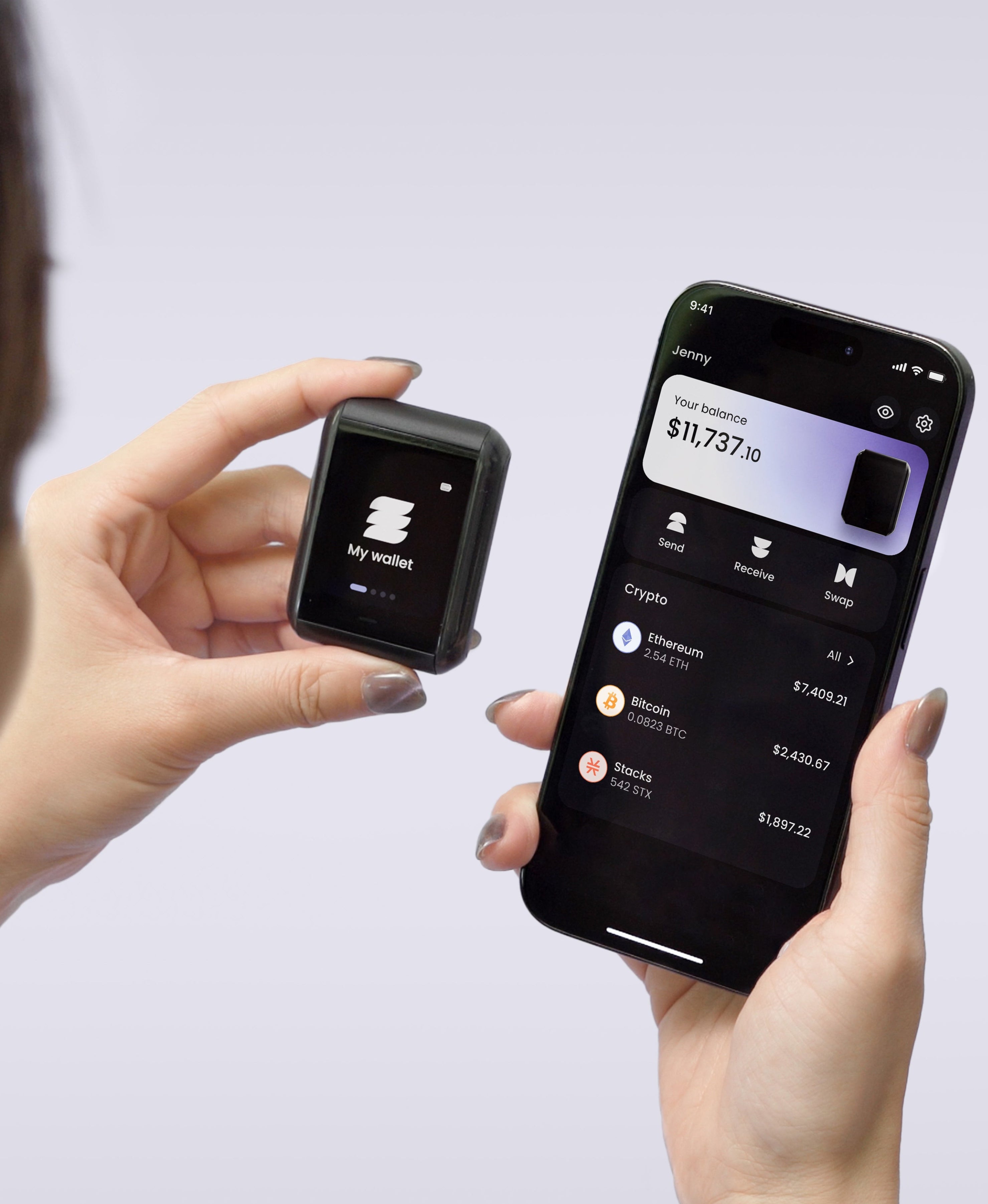
The only crypto wallet you can install on a crowded subway.
Set it up in less than 60 seconds and just tap your phone to send, swap, and recover.
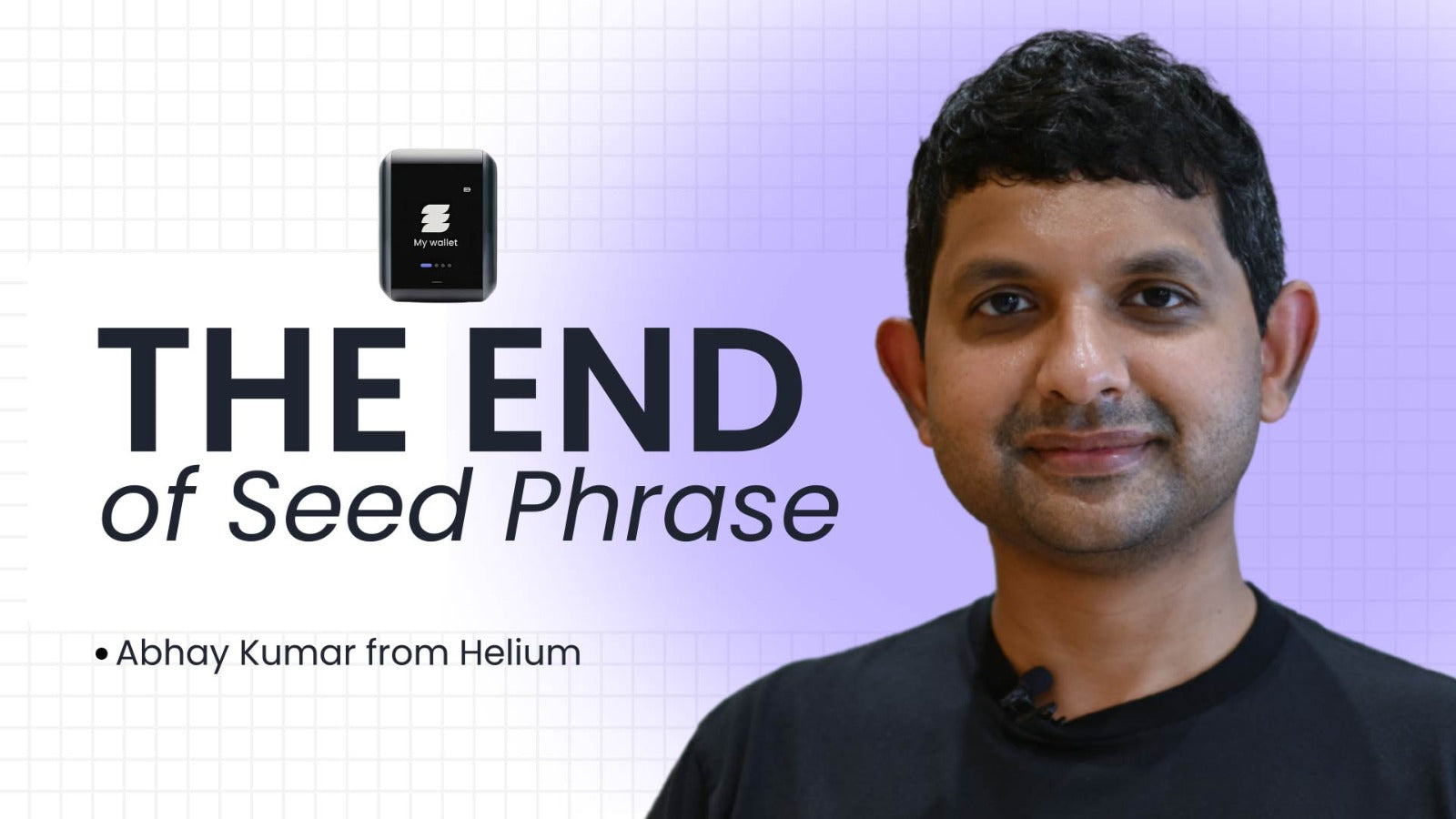
Meet Abhay, Protocol Lead at Helium. A crypto native and software developer who now builds hardware that connects millions of people globally.
Most of us in crypto are digital nomads. We live lightly, change cities, countries, and even continents. Traditional security advice often assumes stability: a home safe, a secure drawer, a predictable routine. That does not align with a fast-paced lifestyle built on mobility.
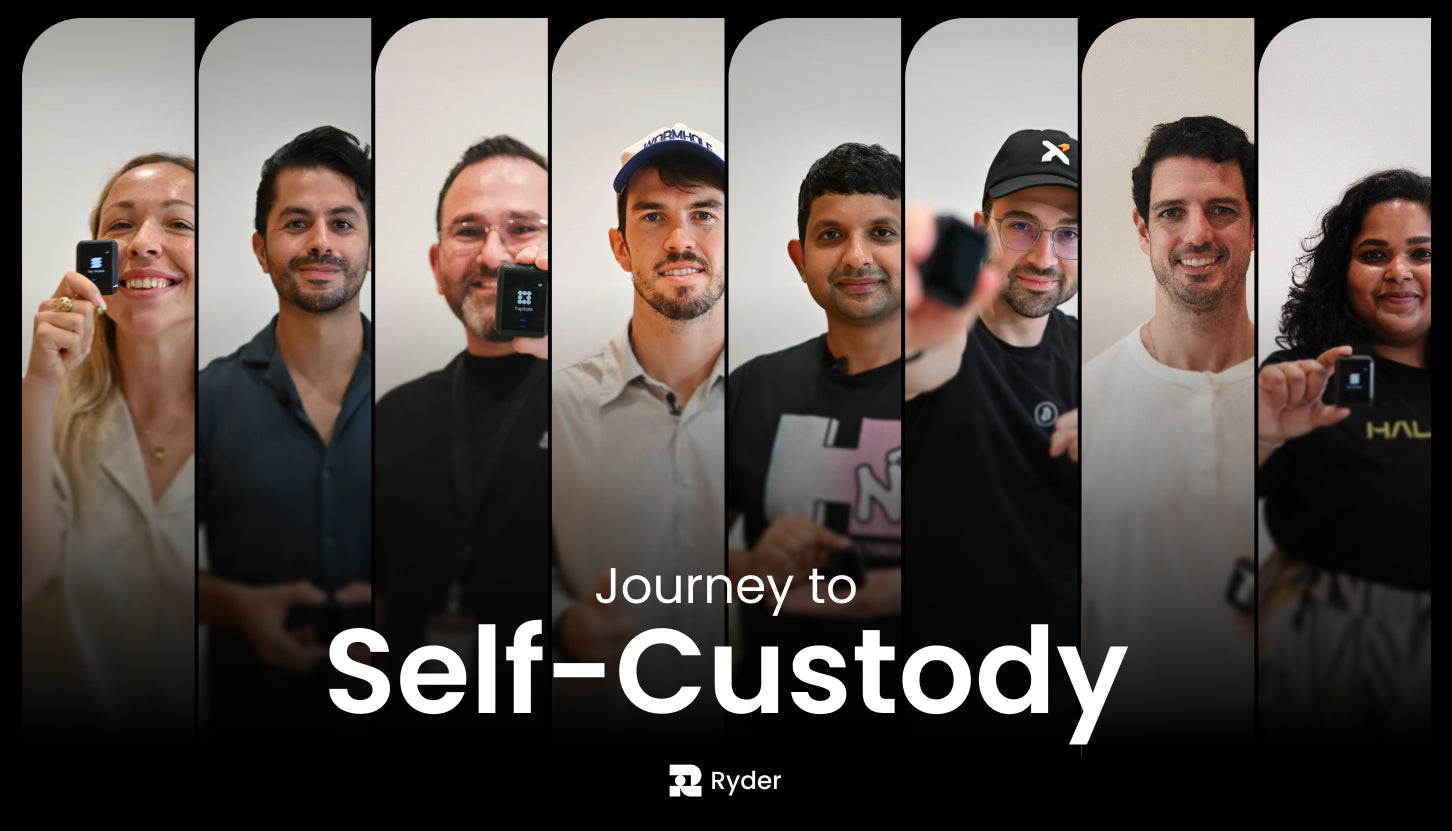
Explore the importance of self custody and take control of your assets without third-party risks and interruptions.

Share: