Ryder One Stories | Abhay: The Hardware Expert & Family Man Building the Future of Connectivity
by Nisheta Sachdev
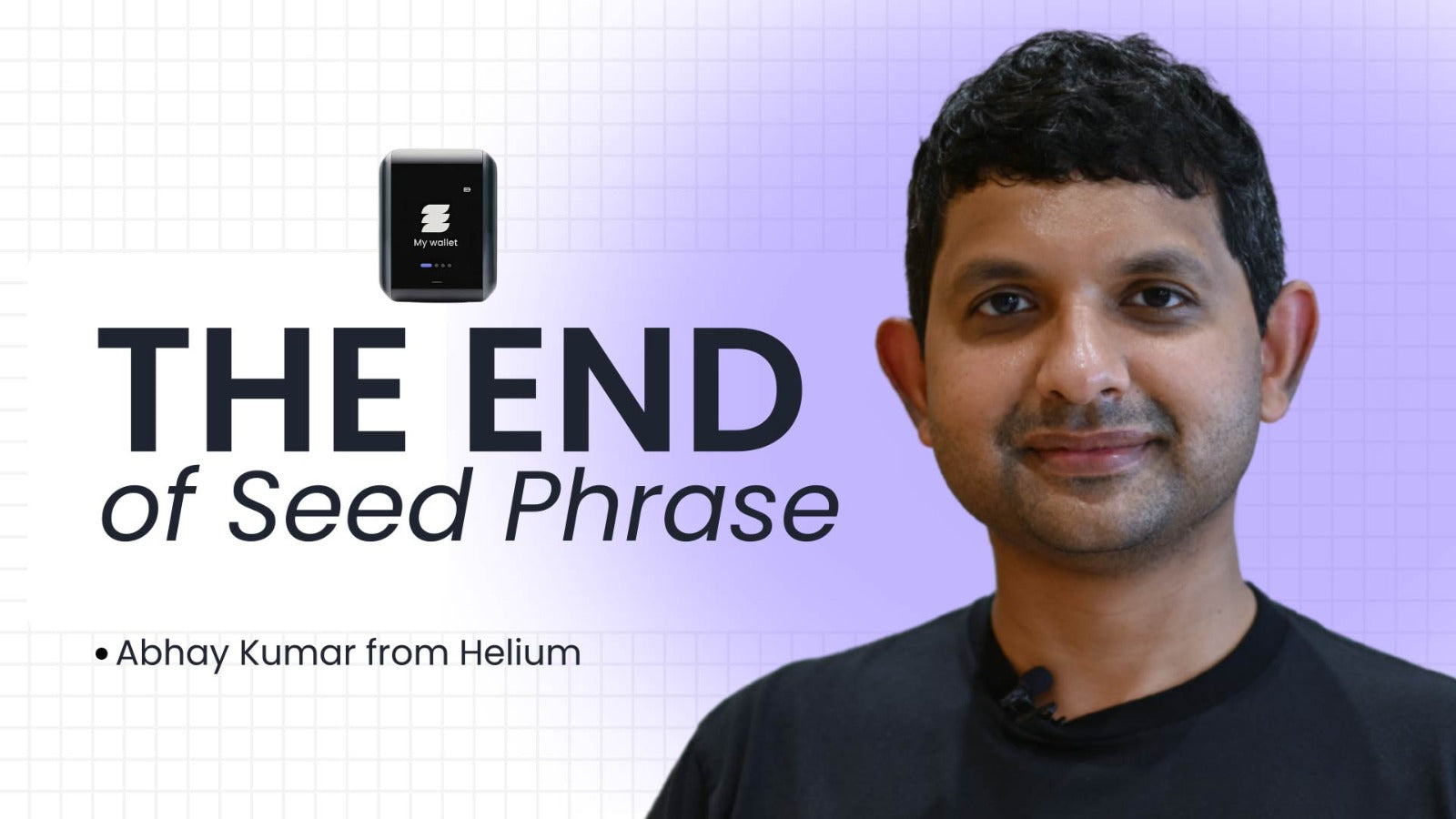
Meet Abhay, Protocol Lead at Helium. A crypto native and software developer who now builds hardware that connects millions of people globally.
Abhay did not join Helium through a job application, but rather as a community member and node operator. Early on, his deep involvement and technical curiosity stood out. What started as participation quickly turned into recognition. From contributor to core team, Abhay became part of the mission to reinvent connectivity from the ground up.
Helium is not just another crypto project. It is an infrastructure company designed to challenge the traditional telecom industry. Originally launched as a decentralized IoT network, Helium evolved into a cellular network built by the people. Today, over 3 million phones connect to the Helium network every day, with global expansion accelerating.
Through Helium, Abhay’s vision is to provide access to connectivity that is open, decentralized, and ultimately free of charge.
The Reality Check on Self Custody
When I asked Abhay what he thought of people who do not practice self custody, his response was simple.
“I don’t blame them.”
For someone deeply embedded in crypto, that answer carried weight.
Abhay understands that self custody is hard. The onboarding process can feel nearly impossible, especially for older generations. He thinks about his own family. The idea that they would need to safely manage seed phrases, understand wallets, and navigate decentralized systems is not trivial. The current systems aren’t just confusing, they’re intimidating. That being said, Abhay also understands why the conversation of self-custody is so important.
When Silicon Valley Bank collapsed, it triggered a domino effect across companies that relied on its services. Several of Abhay’s friends banked with SVB. They did not know if they would be able to make payroll for their teams. In moments like that, the argument that government backed institutions will always protect you starts to weaken.
Time and again, we have seen centralized systems fail the very people they were designed to safeguard.
The Future of Self Custody
Abhay believes that in five years, self custody will look very different. His hope is that the traditional seed phrase becomes obsolete. He sees innovation happening already. Companies like Casa are making multi-sig self custody more accessible, allowing families to securely share and manage wealth without relying on a single fragile recovery phrase.
For Abhay, this is personal. He wants a world where his family could access crypto assets if something ever happened to him. Security should not depend on one person being alive, available, and technically fluent.
In the future, crypto products must be as easy to use as non crypto products. The tech staying hidden, he says, was the secret to Helium’s success.
The 2.5 Minute Unboxing
During our interview, we spoke at length about self custody and family responsibility. But the highlight was the unboxing process.
“I don’t read,” Abhay declared. Line of the day.
Despite that, he set up his wallet in exactly 2.5 minutes. That included one small hiccup and a full minute of me explaining the underlying technology. When asked about his experience, he said something that perfectly captured the evolution of user experience in crypto:
“I didn’t see a single key. I mean, that’s great.”
That is the point.
If crypto is going to onboard the next billion users, it cannot feel like cryptography homework. It has to feel intuitive, invisible, and seamless.
Somewhere between Spaceballs references and record-setting setup times, one thing became clear: the future of decentralization will not be won by ideology alone. It will be won by products that just work.
Most of us in crypto are digital nomads. We live lightly, change cities, countries, and even continents. Traditional security advice often assumes stability: a home safe, a secure drawer, a predictable routine. That does not align with a fast-paced lifestyle built on mobility.



Share: