

Self Custody: DeFi's “The New Challenger Crypto NeoBank” Timeline
DeFi’s promises and advantages are unquestionable, as demonstrated by the Product-Market Fit (PMF) achieved by protocols like MakerDAO, Aave, Compound, Jupiter, and Uniswap. However, a significant challenge remains in building DeFi rails and web3 payments more accessible to the average user. How can we create rails for DeFi, abstracting the complexity of services across various platforms, overcoming slow transaction times of certain protocols, mitigating latent risks, and improving the user experience, which often lags far behind customer expectations?
Over the past few years, we've diligently worked in this space, closely observing the unfolding developments as web3 technologies mature.
- 2015: Launch of Ethereum
- 2017: The Birth of DEXes and Pooled Funds
- 2020: The Rapid Growth of DeFi
- 2023: Web3 Payments and Better Self-custody
- 2024 and beyond: Arrival of Consumer Crypto NeoBanks with DeFi
We strongly believe that the combination of enhanced self-custody coupled with the throughput of Solana and the security of Bitcoin will pave the way for Crypto NeoBanks with DeFi infrastructure, making crypto finance accessible to everyone.
Crypto Payments is gaining traction: Solana Pay (USDC) adoption through VISA
From cross-border settlement to direct-to-consumer payments, Solana Pay has been pivotal in enhancing payment flexibility for third-party merchants, consumers, and traditional banks. This led Visa to support Solana as a high-performance blockchain for USDC settlement payments.
Solana, recognized as the fastest blockchain globally with 400 millisecond block times and an average of 400 transactions per second (TPS), surging to over 2K TPS across diverse use cases during peak demand.


The challenge now is improving the ease of transfer from cold to hot wallets. Our MOM test revealed there’s a significant demand for accessibility and easy fund access. Power users seek convenient access to their web3 funds anytime. Users, whether new or experienced, value the ease of transferring funds between hot and cold wallets. This emphasizes the need for better and simpler self-custody: a hardware wallet that co-signs and approves payments over the mobile limit a user sets, even if in the unlikely event you’re no longer able to access the mobile wallet, allows for a user can easily recover their asset and safely withdraw their money to another wallet of their choice.
Ryder brings a new era of self-custody
We all know that self-custody stands out as a means unlock web3's potential, yet, of 450 million crypto owners, only 2% practices self-custody. This raises critical questions:
-
Security Dilemmas:
Losses totaling $22.6B since 2018, stemming from misplaced seed phrases, exchange hacks, and insolvencies. -
Design and UX Hurdles:
Originating as hardware-first, incumbents yield a fragmented experience, especially in transactions.
Backup solutions compel additional hardware purchases, introducing complexity and reliance on centralized services. -
Adoption Challenges:
Current solutions favor a specialized security approach for "tech enthusiasts," neglecting user-friendly experiences for a broader "lifestyle" audience.
The key question here is how we can streamline self-custody to provide an experience akin to mobile and online banking. This is precisely where Ryder positions itself as the web3 counterpart. Ryder aims to have a significant impact on human behavior in making self custody seamless, seed phrases obsolete, and hardware wallet a part of our shared social fabric. The convergence of these behaviors will create an evolution into a consumer banking experience leveraging DeFi rails supported by the scalability of Solana.


SAGA is the new “hot wallet” for fast transactions
The Solana ecosystem offers the perfect setting for these experiments to take place. The network is already home to enterprises like Visa with its USDC settlements that gave Solana a remarkable rise in the DeFi sector overtaking almost all layers 1 USDC or USDT tx volume. Its direct-to-consumer payments has been popularized through recent Shopify integration with Solana Pay and even having T-Mobile allow the Helium Mobile ‘crypto carrier’ to ride on its 5G network, bringing 31,866 NFTs subscribers to its network.


As crypto payments and DeFi protocols mature, coupled with the advancement in self-custody, the stage is set for consumer DeFi. In the future, Ryder will be focusing on delivering a secure banking experience that will complement any mobile phones as software wallet or SAGA for quick low value transactions coupling with Solana Pay or other payment solutions, a full stack self-custodial solution that will represent the evolution of DeFi into a comprehensive banking solution.
But let’s not forget Bitcoin and other ecosystems
As Bitcoin builders deeply rooted in the Stacks ecosystem, we witness firsthand the experiments and innovation unfolding on the king of all blockchains. The current all-time high hash rate on Bitcoin and the surge in computing directed at it are promising signs. For the first time in Bitcoin's history, transaction fees are surpassing the block reward for miners, hinting at exciting future revenue streams. The pivotal question remains: How can we effectively integrate Bitcoin's financial system with the intricate DeFi landscape? Addressing the historical anxiety associated with traditional self-custody wallets is our first challenge. Overcoming the prevailing user behavior of many OGs/whales who store their BTC in super cold storage and refrain from movement is crucial. To encourage participation in DeFi, innovations in wallet and self-custody solutions are greatly needed. Implementing features such as multisig, social recovery, UX enhancements, and smooth DeFi integrations will simplify the process for Bitcoiners to actively deploy their BTC as a productive asset precisely what we're undertaking at Ryder.
#Ryde to Consumer DeFi
Combining Ryder's approach to self-custody with the throughput of Solana and security of Bitcoin can fulfill with Web3 ideals: eliminating intermediaries, bank fees, chargebacks, and delays, while maintaining convenience in merchant transactions. We aim to broaden the adoption of self-custody by providing a safer and more accessible avenue for users to transition assets from exchanges to Ryder's self-custody wallet, empowering them to truly own and manage their finances. Solana and Bitcoin mark just the beginning. As more protocols mature, we envision a new era of self-custody that will propel forward the web3 ideals we ardently believe in.
We have a multi-year long vision on how on we can achieve all of this and we look forward to unveiling our master plan to of you.
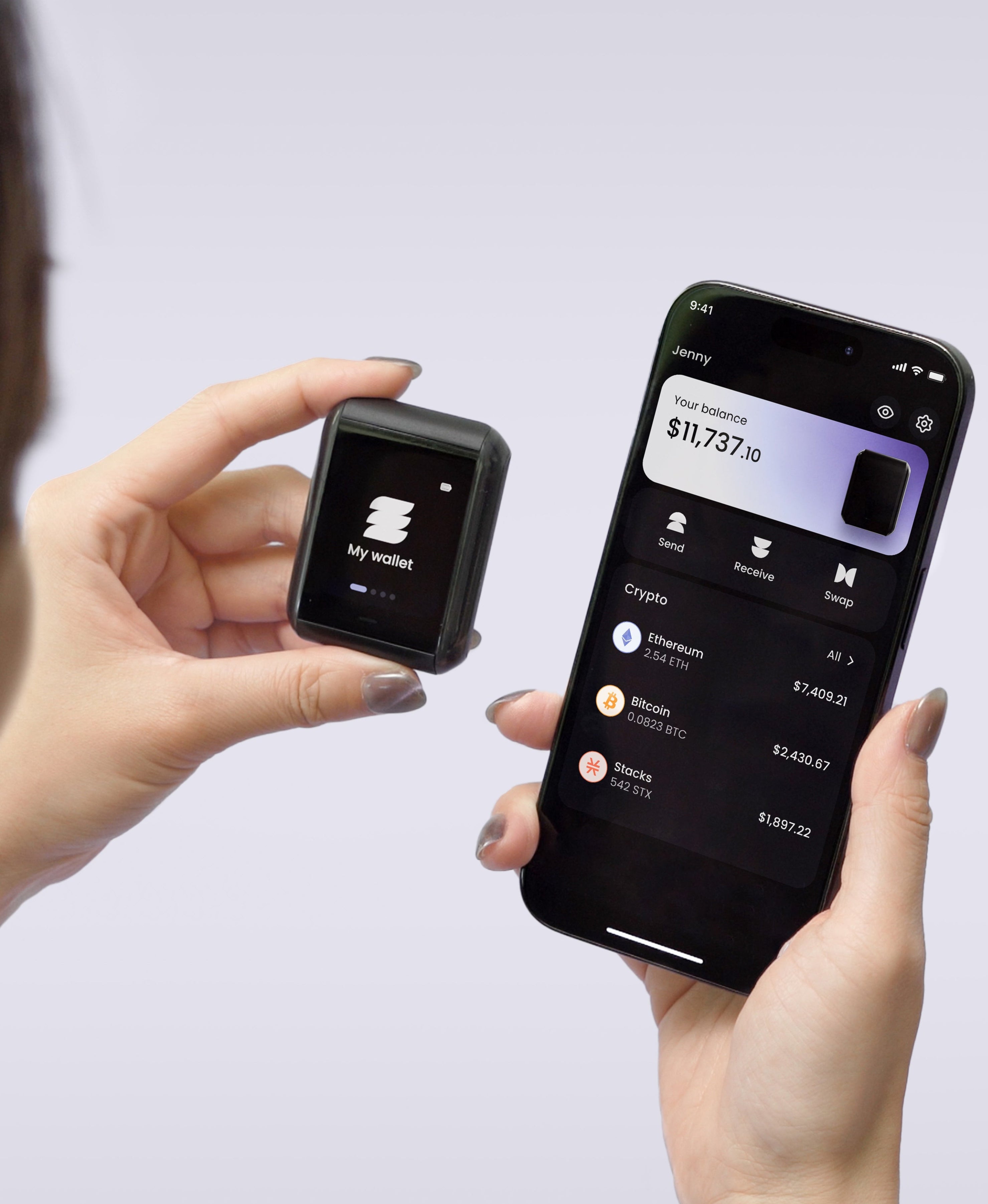
Meet Ryder One
The only crypto wallet you can install on a crowded subway.
Set it up in less than 60 seconds and just tap your phone to send, swap, and recover.
Latest Stories
- 0 comments
- by Nisheta Sachdev
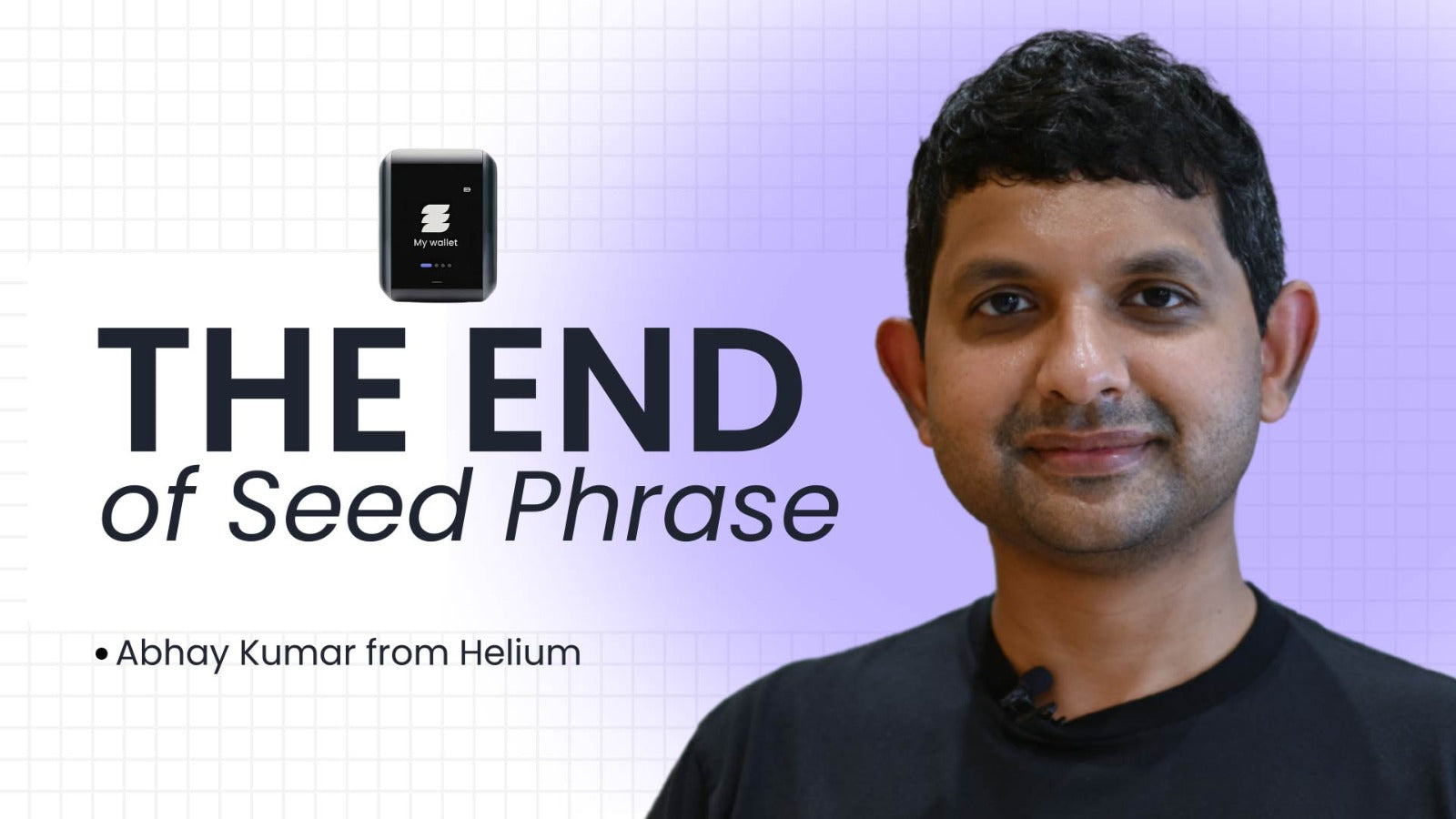
Ryder One Stories | Abhay: The Hardware Expert & Family Man Building the Future of Connectivity
Meet Abhay, Protocol Lead at Helium. A crypto native and software developer who now builds hardware that connects millions of people globally.

- 0 comments
- by Nisheta Sachdev
Ryder One Stories | Dayana Aleksandrova: From Traditional Marketing to Crypto Nomad
Most of us in crypto are digital nomads. We live lightly, change cities, countries, and even continents. Traditional security advice often assumes stability: a home safe, a secure drawer, a predictable routine. That does not align with a fast-paced lifestyle built on mobility.
- 0 comments
- by Nisheta Sachdev
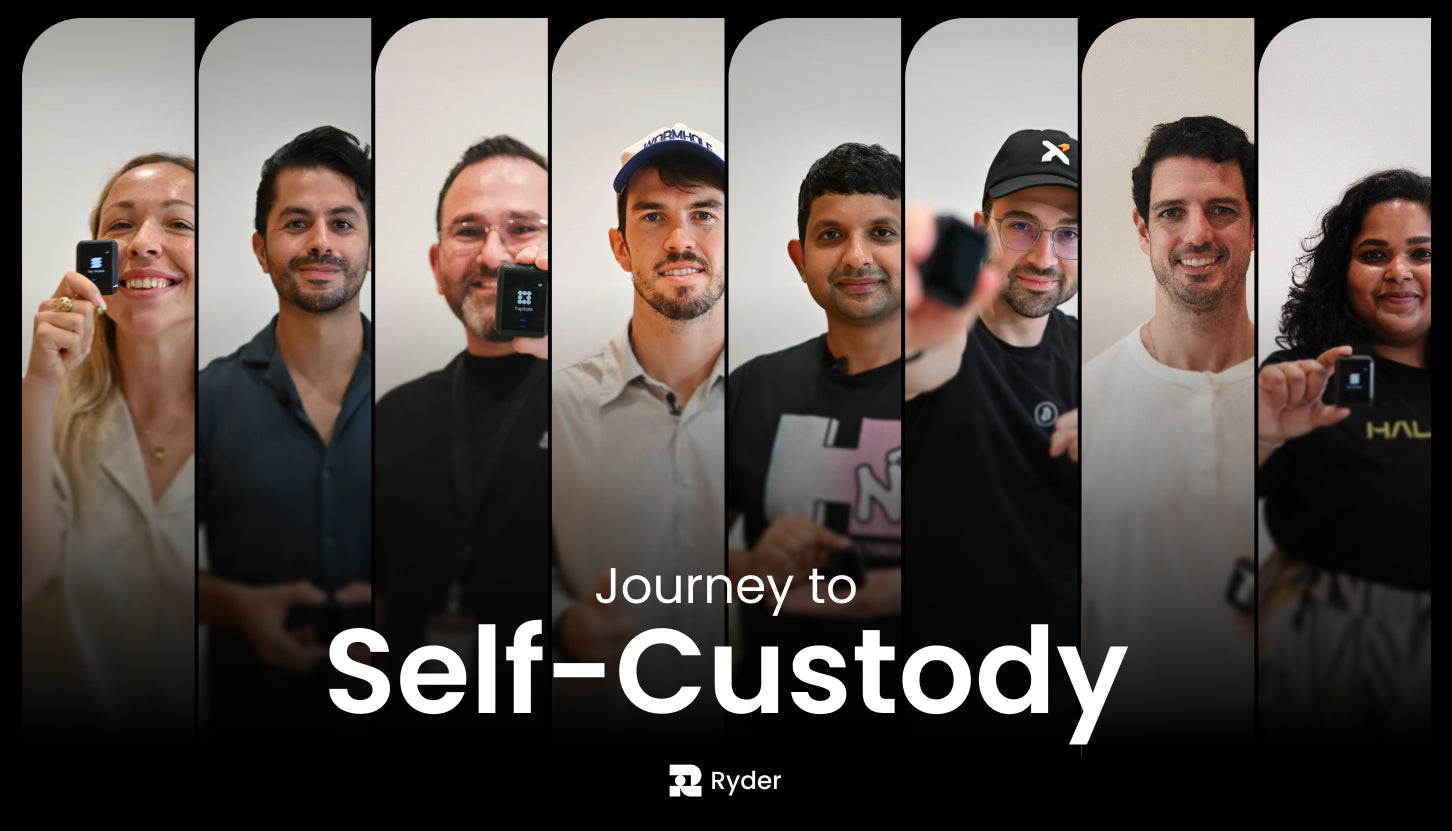
The Journey to Self-Custody: A New Series By Ryder
Explore the importance of self custody and take control of your assets without third-party risks and interruptions.
Share: