

What the People Building Crypto Actually Think About Self-Custody
Most people in crypto have had the same nightmare. You open your wallet and its empty.
For most people, a little refresh and everything is back to normal but for others, their entire portfolio is gone. Everything they own, missing. The scary part? It happens more often than we think.
With self-custody, you own your keys, no bank, no middleman. Just total sovereignty over your assets. Then reality sets in. You have five seed phrases written on pieces of paper scattered across your life. You wake up at 3am wondering if the one in your drawer is still there. You start to understand why most people just leave their crypto on an exchange.
We sat down with Jan, CPO of Xverse, one of the leading Bitcoin ecosystem wallets with millions of users, to talk about self-custody, where it's going, and why the gap between the ideal and the reality still keeps builders up at night.
The Case for Self-Custody Is Obvious. The Problem Is Everything Else.
Jan has been building in the Bitcoin ecosystem for four years. While he loves self-custody, he also thinks the way we do it today is broken.
"I hate the fact that I have five different seed phrases and I have to write them down on a piece of paper," he told us. "From time to time I just have a nightmare. Something happened. What do I do now?"
This isn't someone who doesn't understand crypto. This is someone who builds for a living.
The argument for self-custody has never been stronger, institutions are buying Bitcoin, retail is maturing, the memory of FTX hasn't faded. As Jan put it: "If you have self-custody, you're kind of immune to those things, nobody can really take that Bitcoin away from you."
We do need to clarify, immune to exchange collapses doesn't mean immune to human error. Right now, the standard recovery model puts all of that risk on the user.
Why Seed Phrases Are Still the Weak Link
Ask anyone in crypto what they're most anxious about and seed phrase management comes up fast. It's not because people are careless, but because the system was never designed for how humans actually live. You move houses, you lose things, you forget where you put things three years ago, you die and nobody knows your recovery phrase.
"It's pretty clear that the way we do it today is not scalable," Jan said. "Seed phrases are not how we're going to onboard everybody. It's scary."
He's right. And that tension is what the next wave of hardware wallet design has to solve.
The answer isn't to remove seed phrases. They are the foundation of how Bitcoin wallets work and that's not changing. The answer is to build better systems around them, systems that reduce the surface area for human error without sacrificing the underlying security model.
Resilient Recovery Actually Looks Like with Ryder One
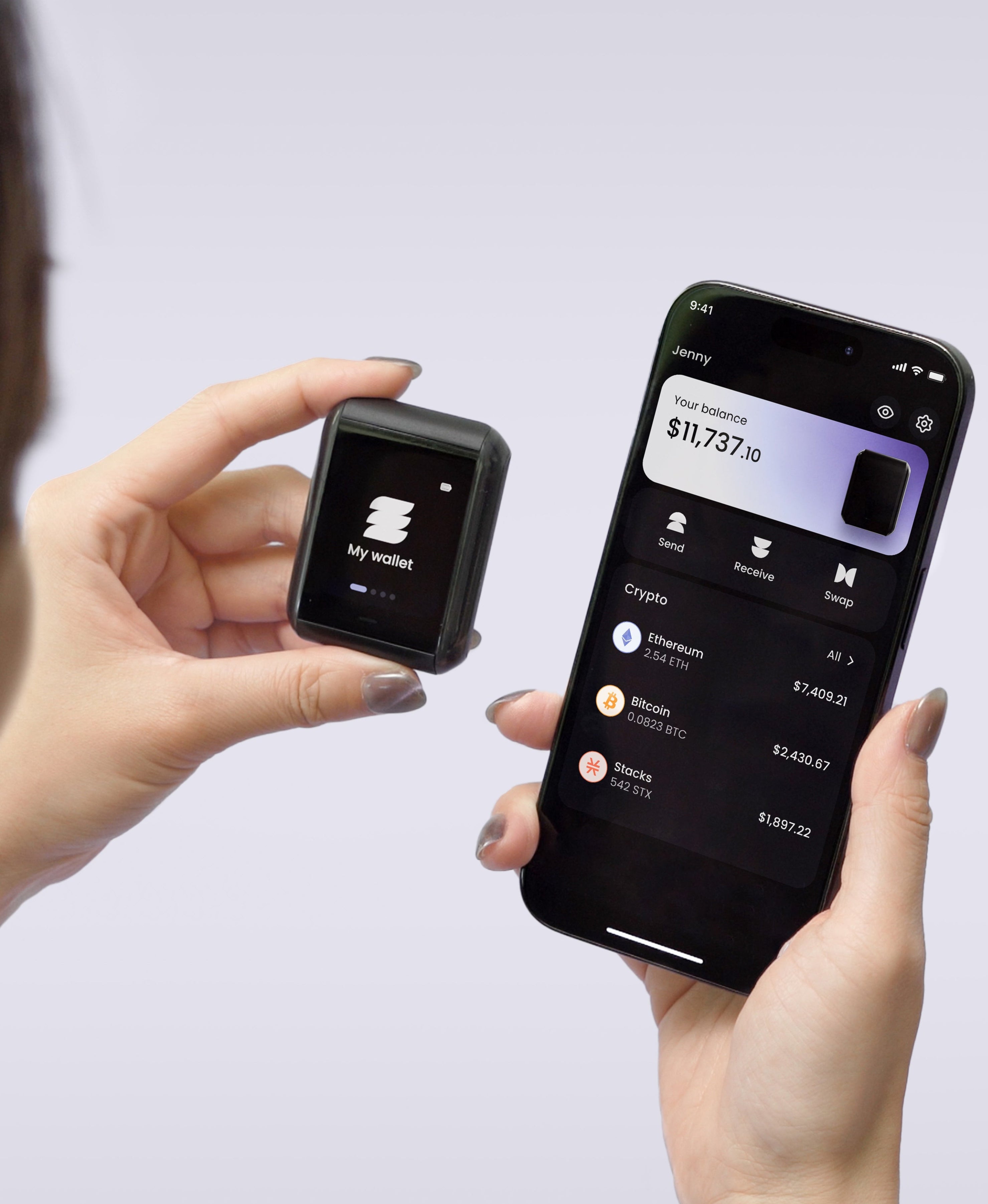
This is where Ryder One was built with a specific philosophy: redundancy at every layer. Most wallets give you one path to recovery, a seed phrase, write it down, don't lose it, good luck. Ryder One gives you three.
Recovery Tags are physical encrypted backups you can create and store in multiple locations, your home, your safe, a trusted family member's house, you choose. If one is lost or damaged, the others still work, no writing, no memorizing, just tap to recover.
Recovery Contacts let you assign people in your life as fallback access points, your family, your closest friends, people who can help restore your wallet if everything else goes wrong.
Phone Encrypted Backup stores a local encrypted copy on your device as an additional fallback layer.
And if you ever need it, your seed phrase is still there, accessible through the Ryder One device itself, not the app, fully in your control.
The Real Goal: Self-Custody That Humans Can Actually Use
We can all agree that self-custody needs solutions that make it easier to practice. Not trading security for convenience, but rather building systems that make the secure choice the easy choice.
The people building this space are living the same frustrations as the users. They're writing down seed phrases and having the same nightmarish moments. The difference is what you do with that frustration.
At Ryder, we built a wallet designed for humans who make mistakes, a wallet with fallback paths, confirmation layers, and multiple recovery options, not because we think security should be complicated, but because we know life is.


Share: