

You've probably heard the phrase: "not your keys, not your crypto."
If you are still learning what that means, you are in the right place. Self-custody is one of the most important concepts in crypto, and also one of the most misunderstood. It is not complicated once you understand the basics, and getting it right from the beginning saves you from the mistakes most people make the hard way.
What’s Crypto Self-Custody?
When you buy crypto on an exchange like Coinbase, Kraken, or Binance, the exchange holds your crypto on your behalf. You see a balance in your account, but the exchange controls the private keys that authorize any movement of those funds. It works like a bank: your money is there, but you are trusting them to hold it. If they want, they can lock your funds at any given moment.
Self-custody means you hold your own private keys. You are the sole person who can authorize transactions. No exchange, no company, no third party can access, freeze, or move your funds without your permission. The crypto is yours.
This is what "not your keys, not your coins" means. If someone else controls the keys, they control the coins, regardless of what your account balance shows.
Not Your Keys, Not Your Crypto
The case for self-custody became much clearer when FTX collapsed in November 2022. Millions of people had crypto on FTX and woke up one day to find they could not access it. The exchange was insolvent. About $8-9 billion in user funds were gone.
FTX was not an isolated incident. Celsius, BlockFi, and several other platforms failed around the same time. The common thread: users had trusted a custodian with their assets, and that custodian failed.
Self-custody removes this risk entirely. If you hold your own keys, no exchange bankruptcy, regulatory freeze, or corporate fraud can touch your funds. The blockchain does not care about FTX. It cares about who controls the keys.
Beyond protection from custodian failure, self-custody also protects you from account freezes for regulatory or compliance reasons, geographic restrictions that prevent withdrawals, platform outages during volatile markets when you most need access, and identity verification delays that lock you out of your own funds.
Losing the Safety Net
Self-custody comes with one significant trade-off: the responsibility for security and recovery falls entirely on you.
On an exchange, if you forget your password, you can reset it. If your account is compromised, you can contact support. There is a safety net.
In self-custody, the safety net is what you build yourself. If you lose access to your wallet and your backup, nobody can recover your funds, not Ryder, not any wallet manufacturer, and not the blockchain. This is by design. The same property that makes it impossible for an exchange to lose your funds also makes it impossible for anyone to help you recover them without your backup.
This is why the backup and recovery experience matters so much. The old model of writing down 24 words and hoping nothing goes wrong with the paper is not adequate for most people. It creates a fragility that undermines the security self-custody is supposed to provide.
Hardware Wallets: The Right Choice for Self-Custody
There are two main types of self-custody wallets, each with a different security profile.
A software wallet like MetaMask or Phantom is an app on your phone or browser. Your private keys are stored on your device, encrypted, and off an exchange, which is good. But they are still on an internet-connected device, which creates exposure to malware, phishing, and device compromise.
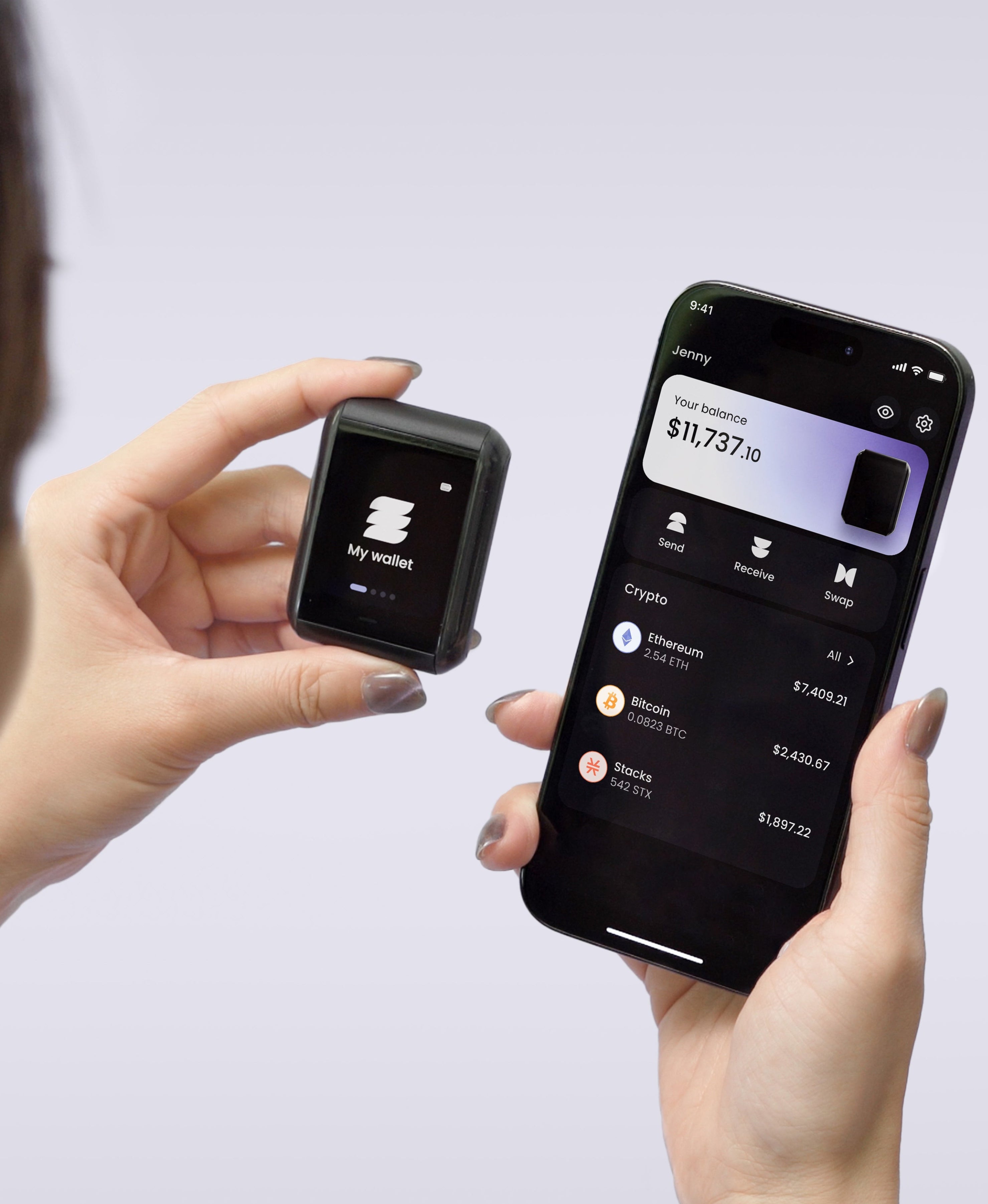
A hardware wallet stores your private keys on a dedicated physical device, isolated from your internet-connected devices. Your keys are generated and stored inside secure hardware, transaction signing happens on the device itself, and the key never touches your computer or phone. For anyone holding a substantial amount of crypto, a hardware wallet is the right choice.
What Makes Ryder One Different
Most hardware wallets solve the custody problem but introduce a new one: the seed phrase backup. Write down 24 words, store them safely, and do not lose them for the rest of your life. That model has real weaknesses.
Ryder One was built to solve both problems at once. Your private keys are stored in an EAL6+ certified Secure Element chip, fully air-gapped, with NFC-only communication. The private keys are then split across multiple backups that you can choose to set up your way.
The entire wallet recovery on Ryder One is handled by TapSafe, a system that uses Shamir's Secret Sharing to split your backup across multiple Recovery Tags, your phone, and optionally trusted Recovery Contacts. No single piece reveals your wallet. Recovery is a tap, not a transcription exercise. And if circumstances change, your recovery setup can change with them.
Setup takes under 60 seconds with no technical knowledge required. If you can use a smartphone, you can definitely use Ryder One.
How to Get Started
Getting into self-custody for the first time does not have to be overwhelming. Start by choosing a hardware wallet. For most people, the combination of military-grade security and straightforward recovery makes Ryder One a strong starting point. If you are holding Bitcoin, Ethereum, Solana, Stacks, or a mix of chains, Ryder One covers them all from one device.
Once your wallet arrives, follow the guided setup in the Ryder App. Your wallet is created on-device, your keys stay on-device, and TapSafe walks you through setting up your Recovery Tags so you have a backup from day one.
Move a small amount of crypto first to get comfortable with the flow. Once you are confident, you can move more. The goal is not perfection on day one but taking the first step from trusting someone else with your crypto to trusting yourself. The best part is that we’ve created guides to walk you through every feature of Ryder One!
Self-Custody Is for Everyone
There is a persistent myth that self-custody is only for technically sophisticated users, that it requires understanding cryptography, managing complex setups, and tolerating friction. In 2015 that was largely true….but in 2026 it’s not, and it really shouldn’t be.
Modern hardware wallets are designed for real people with real lives. Setup takes minutes, daily use is a tap, and recovery is built into the experience rather than bolted on as an afterthought. Nearly one in four adults holds digital assets in 2026. Most of them have never taken the step of self-custody, and most of them are one exchange failure away from finding out why that matters.
The best time to take control of your crypto is before something goes wrong. That is what self-custody is for. Get Ryder One with free worldwide shipping and a 100% money-back guarantee.


Share: