

Most people with a hardware wallet think they're safe. They're not wrong…but they're not fully right either.
The device is only half the equation. The other half is your recovery setup. For most people, that's a single piece of paper, stored in a single location, with no backup. One house fire, flood, or one forgetful moment and you’ve lost it all.
That's not a security setup. That's a single point of failure.
In the first half of 2025 alone, $3.5 billion in crypto was lost. The majority wasn't from sophisticated hacks. It was from seed phrase exploits: lost, stolen, or exposed recovery phrases that gave attackers full access to wallets.
The weak link in most crypto setups isn't the hardware, it's the recovery.
Why You Need to Hold Your Own Keys
Before we get into how to build a resilient setup, it's worth understanding why self-custody matters in the first place. Exchanges and custodians are convenient, but they carry a risk that most people underestimate: when someone else holds your keys, you don't actually own your crypto.
FTX was one of the largest crypto exchanges in the world. In 2022, it collapsed overnight. Billions in user funds were lost and users had no recourse. Mt. Gox, a Japanese exchange, was hacked and lost around 850,000 BTC. These aren't rare edge cases. Exchanges have been frozen by regulators, gone insolvent, and simply disappeared.
Self-custody removes that counterparty risk entirely. You hold the keys, you control the funds. No one can freeze, restrict, or lose access to your assets on your behalf.
That freedom comes with responsibility, but with the right setup, it's manageable.
Hardware Wallets: The Right Foundation
There are two main types of self-custody wallets.
Software wallets are apps like MetaMask or Trust Wallet. They're connected to the internet, which makes them fast and convenient. The tradeoff: any malware on your phone or computer is a potential threat to your funds.
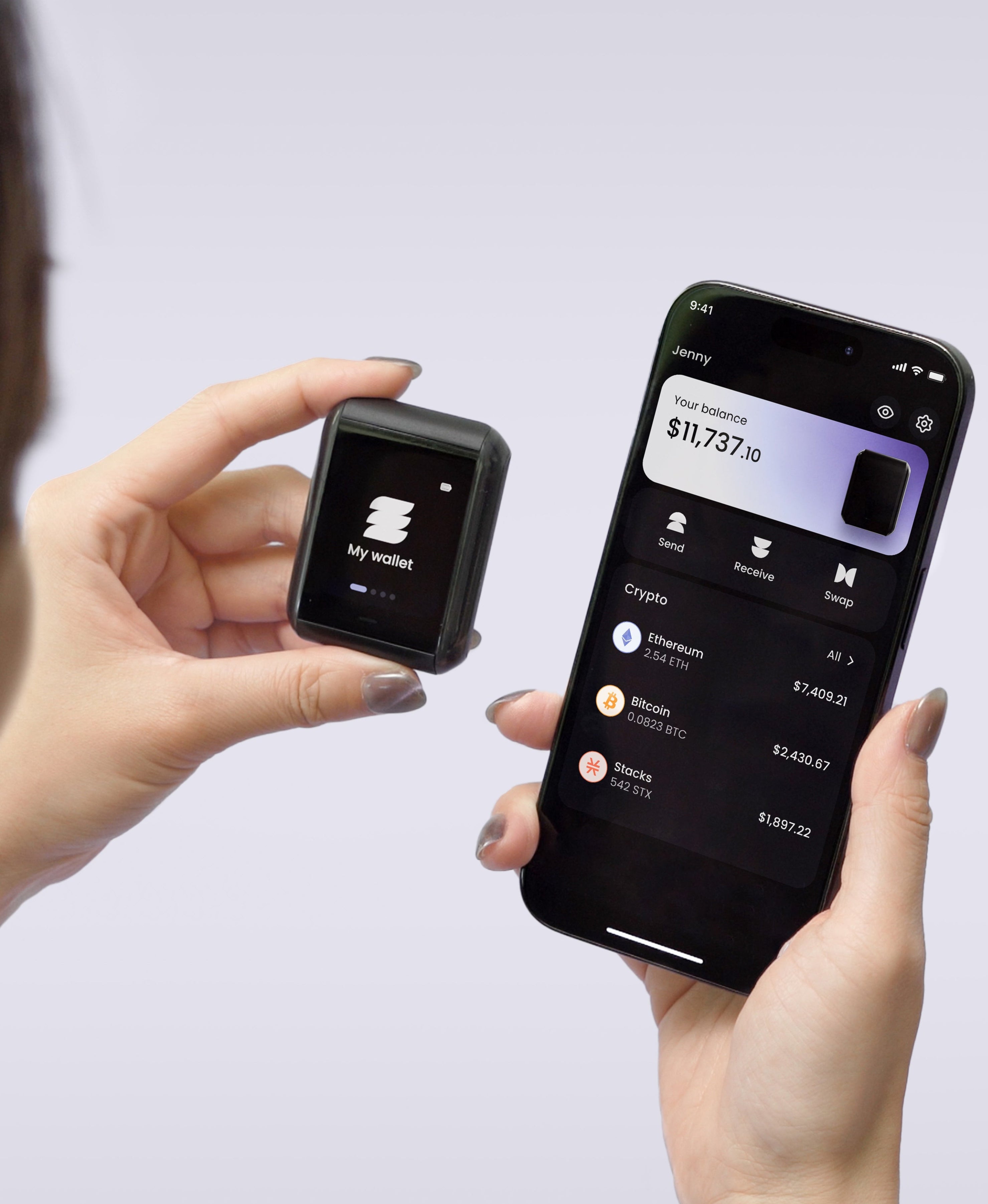
Hardware wallets are physical devices that store your keys offline. Ryder One, Ledger, and Trezor fall into this category. Because they're offline, they're far harder to attack remotely. The tradeoff: they require more intentional setup.
For anyone serious about protecting meaningful holdings, a hardware wallet is the right foundation. But it's only the foundation.
The Real Vulnerability: Your Recovery Setup
Every wallet, hardware or software, generates a seed phrase. Typically 12 or 24 words, it's the master key to your wallet. Anyone who has it has full access to your funds. Lose it, and your wallet is gone.
Most people write it down on a piece of paper and store it somewhere they consider safe. That approach has a fundamental problem: it creates a single point of failure. One location, one copy. One mistake away from losing everything.
This is where billions of dollars are lost every year. Not because hardware wallets fail, but because recovery systems aren't built to survive real life.
TapSafe: Built for the Way People Actually Live
At Ryder, we built TapSafe to solve exactly this problem.
TapSafe uses Shamir Secret Sharing, a cryptographic method trusted by governments, militaries, and high-security organizations for decades. Instead of a single seed phrase stored in a single place, TapSafe splits your wallet recovery across multiple components that you control and suit your lifestyle.
Recovery Tags are encrypted NFC tags that each hold 50% of your wallet recovery. You can create as many as you want and store them in different locations: your home, a safe, a safety deposit box. If one is lost or damaged, the others still work. You only need two Recovery Tags to fully restore your wallet.
Recovery Contacts are trusted people in your life, friends or family, who each hold 25% of your recovery. They see nothing about your wallet or your funds. They simply hold a piece of the puzzle. Four Recovery Contacts give you 100% recovery coverage.
Phone Backup stores 50% of your recovery locally on your phone in an encrypted format. Even if your phone is lost or stolen, it's not a single point of failure, but rather just one layer of a larger system.
The goal is 100% recovery coverage through any combination that fits your life. Whether that means two Recovery Tags, four Recovery Contacts, or a mix of all. TapSafe adapts to how you actually live, not how a security manual thinks you should.
The best part is your seed phrase doesn't go away. If you ever want to use it in its traditional form, you can. TapSafe removes the sole dependency on it, not the option itself.
Your Setup Is Your Security
A hardware wallet without a resilient recovery system is like a vault with the combination written on a sticky note.
Ryder One is built with the understanding that people lose things, life happens, and security systems need to hold up under real conditions, not perfect ones. Whether it's a lost phone, a damaged tag, or an unavailable contact, the system is designed to bend, not break.
If you're serious about protecting your crypto, start with a hardware wallet. Then build a recovery setup that can survive real life.
Your crypto is only as safe as your setup. Build it accordingly with Ryder One.



Share: