

Cryptocurrency self‑custody is one of the most empowering steps you can take as a crypto user. While you normally pay banks a fee to manage your funds, this doesn’t exist with self-custody. You are your own bank. Instead of holding your cash, you hold your keys to your wallet. These are called your Private Keys.
With great power comes great responsibility, and self-custody is no different. With self custody, there’s no bank, exchange, or “support team” to help you recover your funds in case something goes wrong...and we get it, that sounds really intense and scary, but it doesn’t have to be.
The good news is that security isn’t about being a hacker, it’s about understanding risk and adopting a few smart habits early. As they say, you’re only as secure as your own security habits.
We created this guide to help you with basic security habits every crypto user should adopt and why they matter.
Understanding the Real Threats (and What the Data Says)
Crypto security isn’t theoretical, people lose billions of dollars every year. The first step to security is making sure to understand where these issues are coming from.
Here are some sobering figures:
- According to a report by Chainalysis, scams and fraud in crypto are estimated to have stolen $17 billion in 2025, with impersonation scams growing by 1,400% year over year. Average scam losses jumped from ~$782 to ~$2,764 per incident.
- This report also claimed that AI-enabled phishing scams were 4.5 times more profitable than traditional scams.
- CertiK reported that in the first half of 2025 alone, nearly $2.5 billion was lost to hacks and scams, and a large portion was due to compromised wallets and phishing.
- Blockchain address poisoning is a form of scam where attackers influence your transaction history and trick you into sending crypto to lookalike addresses. This has caused millions in losses. A report by the Computer Sciences department at Cornell University, detected 270M address poisoning on-chain attacks targeting 17M victims. 6,633 incidents have caused at least 83.8M USD in losses, which makes blockchain address poisoning one of the largest cryptocurrency phishing schemes observed.
This is the unfortunate reality of a growing ecosystem where reversible transactions don’t exist. Once your crypto leaves your wallet, you can’t call customer support and hit “undo.” Now let’s get into the habits to start forming.
1. Never Share Your Seed Phrase With Anyone…Ever
You already know not to store it digitally, but now let’s talk about social attack vectors.
Scammers use impersonation tactics to trick users into revealing their seed phrases by pretending to be:
- Support agents from wallets or exchanges.
- Influencers offering help.
- Community moderators in Telegram/Discord.
No legitimate wallet provider will ever ask for your seed phrase. Ever. If someone does, that’s a scam, and handing it over is handing over your crypto.
2. Use Hardware Wallets for Long‑Term Storage
There are two broad types of wallets:
-
Hot wallets: connected to the internet (apps on phones or computers).
- These include Metamask, TrustWallet, Phantom, SolFlare, etc.
-
Cold wallets: offline devices that store your keys (hardware wallets).
- These include Ryder One, Trezor, Ledger, SafePal etc.
Cold wallets are much safer because they never expose your private keys to the internet. This dramatically reduces the risk of remote hacks. ****In addition to keeping your private keys offline, they require physical confirmation for transactions, which stops most remote attacks.
3. Lock Down Your Devices and Accounts
Even once your crypto keys are physically secure, your devices still need protection:
- Use strong PINs or passcodes
- Enable biometric locks (fingerprint or face unlock)
- Use two‑factor authentication (2FA) on all related accounts
These steps protect you if your phone gets lost, stolen, or accessed by someone else.
4. Treat Your Recovery Phrase Like Cash (Because It Is)
Your recovery or seed phrase is not just another password. It is the master key to your entire wallet, meaning:
- Anyone who has it can access (and take) your crypto.
- If you lose it, you lose access to your wallet forever.
That’s why storing your seed phrase on your phone, even in cloud storage, or as a screenshot isn’t just risky and fundamentally insecure. Phones and computers can get hacked, infected with malware, or backed up to the cloud without you realizing it. Once a scammer gets that phrase, your crypto is gone.
Safe practices include:
- Write it down on paper and store it offline.
- Consider fireproof and waterproof storage.
- Make multiple physical copies in geographically separate secure locations if possible.
This might feel like overkill, but it’s the only way to ensure you’re not one bad malware infection or lost phone away from losing everything.
5. Never Click Links You Didn’t Intentionally Seek Out
Phishing is one of the most common ways crypto users lose funds:
- A malicious link can take you to a site that looks exactly like your wallet or exchange.
- You enter credentials or approve transactions that you think are safe, but they’re not.
Always type a site’s address directly into the browser or use bookmarks. Don’t trust search results or DMs asking you to click links, as scammers often buy ads or host fake sites that rank high in results.
This is especially true in crypto communities (Telegram, Twitter, Discord) where scam bots and people drop malicious links.
6. Double‑Check Everything Before You Approve It
Transactions in crypto are irreversible. That means every time you click “approve” you’re signing away your funds.
A few tips:
- Verify the address character by character before sending. If you don’t have time, form a habit of at least checking the first and last few characters of the wallet address you’re sending funds to. Ideally though, check the full address.
- For bigger transactions, do a test transaction with a tiny amount first.
- If a dApp or site asks for permissions, read what it is actually asking you to sign, don’t just assume it’s safe.
This habit alone will save countless beginners from sending crypto to the wrong address, which is one of the most common forms of loss.
Self Custody Isn’t Hard But It Is Serious
The beauty of self‑custody is control, but that comes with responsibility. None of the habits above require technical expertise; they just require awareness and consistency.
Think of crypto security like home security:
- You wouldn’t leave your front door unlocked and your cash on the coffee table.
- You wouldn’t share your bank PIN with a stranger who called claiming to be from the bank.
So treat your crypto the same way:
- Lock it down.
- Understand the threats.
- Make good habits non‑negotiable.
The Future of Self Custody is Effortless
We know the information in this blog is a lot to take in, but we’re here with good news. There’s a trend we’ve noticed: the future of self-custody is stress-free. Traditional wallets that rely on 12–24 word backups have been the gold standard for years, but they also create a single point of failure that many users find intimidating. Traditional seed phrases were are now being augmented or replaced by seedless recovery mechanisms, multi‑party computation (MPC), social recovery, and smart contract‑based backups that reduce human error while preserving user control.
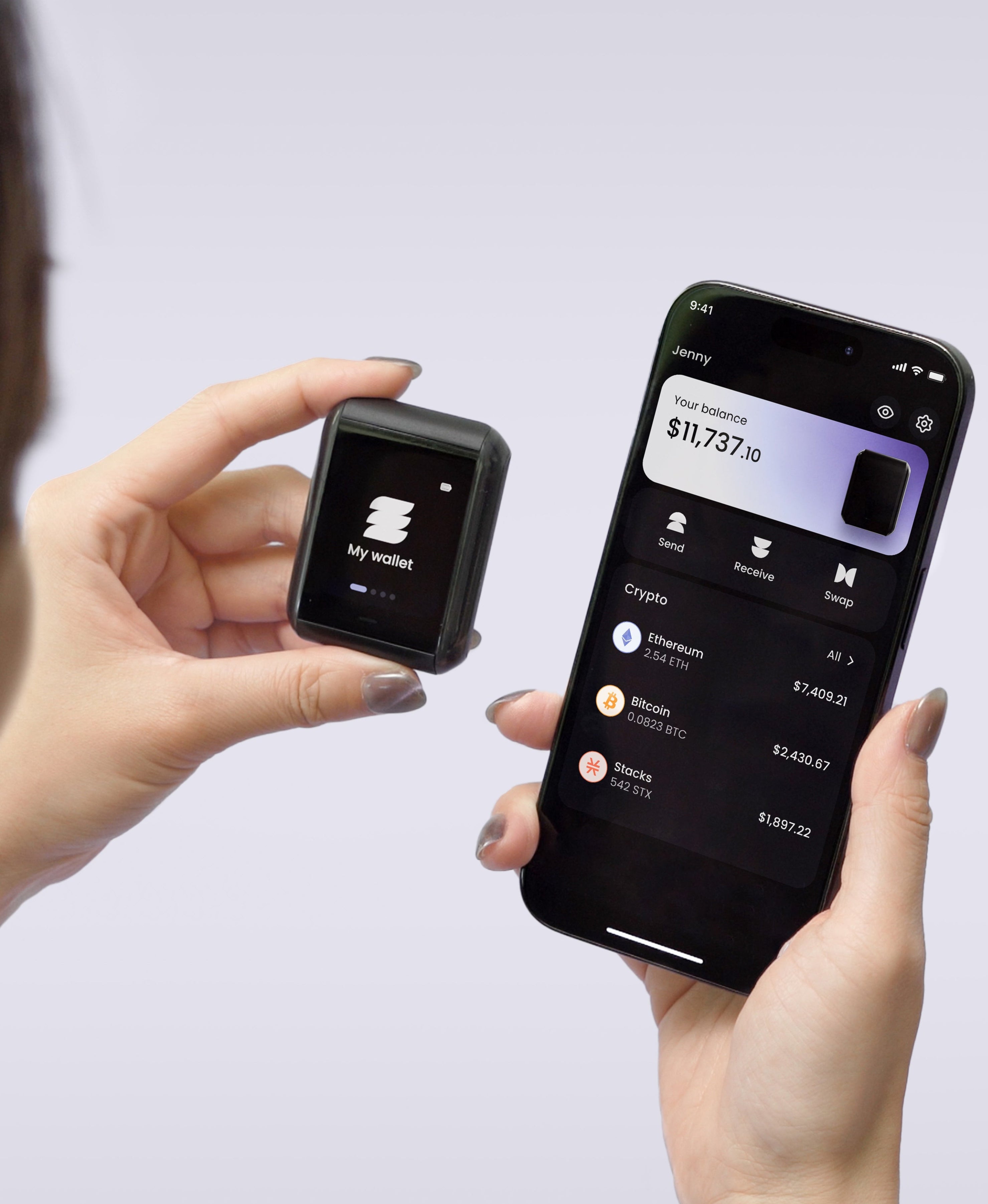
Take our native TapSafe Technology as an example. TapSafe is Ryder’s breakthrough backup technology that makes self-custody safer and simpler. Built via Shamir Secret Sharing, TapSafe splits Ryder One’s recovery into several pieces instead of solely relying on a seed phrase.
These backups are encrypted and stored across your phone, Recovery Tags, or even Recovery Contacts (trusted friends and family). These pieces fit together like a puzzle to restore your wallet when needed. You only need a few of these pieces in various combinations to recover your wallet in case you lose your Ryder One. TapSafe is about to be fully open-source and is undergoing an audit by Halborn. It’s built to be foolproof, even if you lose your Ryder One, your phone, or both. No seed phrase photos, no pen and paper, no safes, and more importantly, no stress. Just crypto security that works like it should.
This shift is driven by a broader push to make self‑custody intuitive without compromising sovereignty, a push that includes hybrid models where seed phrases sit alongside newer recovery tools and passkey‑style authentication, and where embedded wallets and account abstraction streamline onboarding for everyday users. No matter which model wins, the basics of thoughtful backups, phishing awareness, and transaction caution, will always be the foundation of safe crypto ownership.


Share: