

On July 30, 2026, an attacker drained 1,196 Bitcoin addresses in 41 minutes. By August 4, Galaxy Research estimated that roughly 2,055 BTC had been swept from more than 7,700 addresses, worth approximately $130 million. The funds came from Coldcard hardware wallets, specifically Mk2 and Mk3 devices running firmware versions 4.0.1 through 4.1.9. No phishing, no malware, and no physical access to the device required.
CoinKite’s Coldcard wallet was hit by a massive exploit draining over 1,500 BTC ($100M+) due to a silent 2021 firmware RNG bug. Will Owens baited an automated drainer bot and won an RBF fee race live onchain. And open-source AI models are officially rewriting the playbook for… pic.twitter.com/GNC87NvwwK
— Galaxy Research (@glxyresearch) August 4, 2026
The attacker did not break the blockchain. They exploited a build configuration error introduced on March 1, 2021, that silently routed seed generation through a software fallback instead of the device's dedicated hardware random number generator. The seed is supposed to come from a hardware random number generator producing 128 bits of entropy, a number so large that guessing it is computationally impossible. On Mk3 devices, the effective search space collapsed to roughly 40 bits. The gap between 128 bits and 40 bits is not a matter of degree. It is the difference between a vault and a combination lock where someone already knows the manufacturer's default codes.
Here’s a comparison on what the seed phrase generator looks like for various hardware wallets, and the time it’d take to crack them.

Block traced the fault to Coldcard's production configuration The libngu library checked whether the macro existed rather than whether it was enabled, binding the build to MicroPython's Yasmarang fallback, initialized from the chip's unique ID and timer registers, collecting no fresh entropy after initialization. In plain terms: a single line of code in a configuration file, present in devices shipped for over four years, made millions of dollars in Bitcoin guessable from the outside.
What This Incident Tells Us
The instinct, particularly among those who have never fully trusted hardware wallets, is to read this as proof that self-custody doesn't work. While that instinct is understandable, it is wrong, so it does deserve a direct response.
Long among Bitcoin's biggest selling points has been that investors don't need to trust banks and exchanges to safeguard their money. That promise suffered one of its biggest blows after a flaw in Coinkite's Coldcard allowed attackers to recreate wallet recovery phrases and steal bitcoin from what users believed were securely self-custodied wallets.
But here is what that framing misses: the flaw wasn’t in self-custory, it was in one manufacturer's firmware. The Bitcoin protocol is intact. The concept of private key ownership is intact. What failed was a specific implementation of a specific step in a specific device, by a specific company that has since acknowledged full accountability.
TRM Labs found that infrastructure and operational compromise, chiefly private-key and seed-phrase theft, accounted for about 76% of the value stolen in crypto hacks during the first half of 2026. The Coldcard incident fits that pattern precisely. The exposure originated at the key generation stage, before any user ever touched a seed phrase. That is a manufacturing and firmware quality problem. It is not an argument for exchanges, custodians, or ETFs. Those alternatives carry their own categories of failure, and July demonstrated those too.
The Questions That Need Answers
Can you trust the seed generation process?
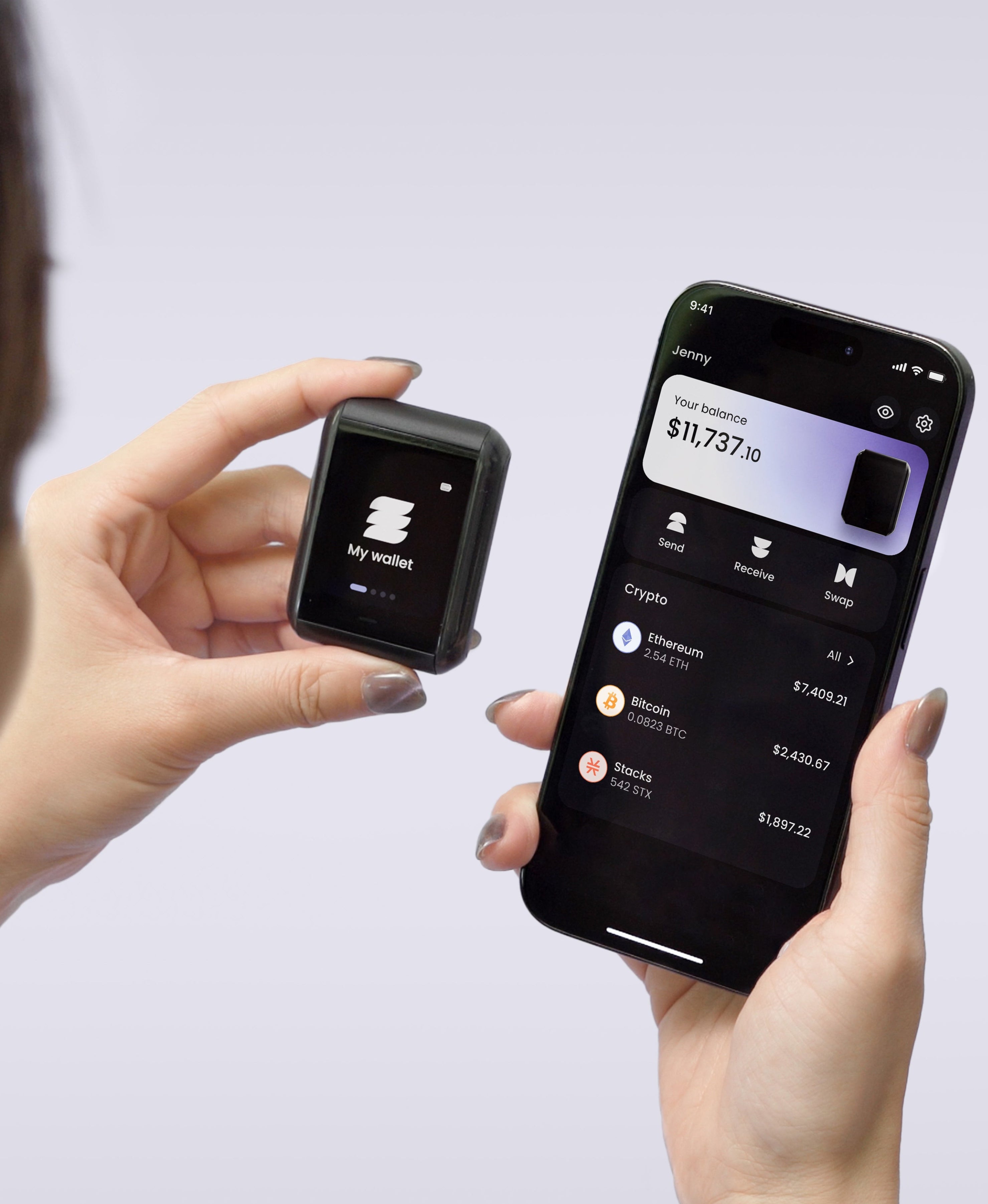
This is the right question, and it is one every hardware wallet manufacturer should now be answering publicly. At Ryder, seed generation on the Ryder One runs through a dedicated hardware random number generator on the EAL6+ secure element. The Halborn audit conducted between October and December 2025 validated our BIP-32, BIP-39, and BIP-44 implementation, Shamir's Secret Sharing, and side-channel resistance independently. We invited them to find weaknesses and published what they found.
Is open-source firmware a guarantee of security?
Open-source claims didn't prevent the problem, or catch it quickly enough for many. Open-source code is auditable, but being auditable is not the same as being audited. Coinkite's firmware was publicly available for years. The build configuration error that caused this incident was not caught by community review during that time. Openness is a necessary condition for trust, but it is not sufficient on its own. Independent, professional security audits are what close that gap.
Does "cold storage" still mean what people think it means?
It does, with a caveat the Coldcard incident has made unavoidable: cold storage keeps your keys offline after generation. It cannot retroactively fix a key that was generated weakly. The integrity of self-custody depends on the integrity of every step in the chain, including the one that happens before you ever send a transaction.
What about single points of failure?
The incident has accelerated conversation around multisig and distributed key setups. TapSafe Recovery was built around exactly this principle: no single component gives complete access to your wallet. A Recovery Tag, your phone, and optional Recovery Contacts each hold a piece. An attacker who compromises one layer has nothing. That architecture does not prevent a firmware-level entropy failure, but it means that recovery itself is never a single point of failure, which is a different and equally important problem.
What This Means for Ryder One
We are not going to use this moment to tell you Ryder One is the only hardware wallet you should trust. We are not going to exaggerate what happened, or minimize it, or use someone else's loss as a marketing opportunity. Over a hundred million dollars in Bitcoin stolen from people who did the right thing and moved to self-custody is not a story we want to capitalize on.
What we will do is answer questions directly. If you want to understand how Ryder One generates seeds, we will explain it. If you want to read the Halborn audit findings, they are available. If you want to know how TapSafe Recovery distributes your backup, we will walk through the cryptography.
The hardware wallet industry has a trust problem this week. The answer to that problem is not better marketing. It is transparency, accountability, and a willingness to show your work.
Coinkite's founder Rodolfo Novak has apologized publicly, taken full accountability, and offered to assist affected users with police reports and insurance claims. That is the right response for a serious exploit that they faced. The conversation that follows it, about entropy standards, audit practices, and what hardware wallet security actually requires, is one the entire industry needs to have.
If You Have Funds on a Coldcard Device
Anyone running Coldcard Mk3 firmware between versions 4.0.1 and 4.1.9 needs to update their firmware and generate a new seed phrase. Affected Mk4, Mk5, and Q devices may have generated seeds with about 72 bits of entropy. If you are unsure whether your device is affected, check Coinkite's official advisory and do not delay.
If you are considering moving to a new wallet, take your time and do it carefully. Send a small test transaction before moving your full balance. Verify receiving addresses on the device screen before signing anything.
FAQ
Was Bitcoin itself compromised by the Coldcard incident?
No, the flaw was specific to how certain Coldcard devices generated wallet seeds, not a weakness in Bitcoin's underlying blockchain. The Bitcoin protocol is intact.
How does Ryder One generate seeds?
Seed generation on Ryder One runs through a dedicated hardware True Random Number Generator (TRNG) on the EAL6+ secure element with 256 bits of entropy. The implementation was independently audited by Halborn between October and December 2025, covering BIP-32, BIP-39, BIP-44, Shamir's Secret Sharing, TapSafe, and side-channel resistance.
Does TapSafe Recovery protect against entropy failures?
TapSafe protects the recovery process, distributing your backup across three layers with no single point of failure. It does not retroactively fix a seed generated with weak entropy. The protection against entropy failures is in the hardware RNG and the audit process that validates it.
Should I move my crypto off hardware wallets entirely?
The Coldcard incident was a firmware failure by one manufacturer, not a failure of the hardware wallet category. Exchanges and custodians carry their own categories of risk, three of which shut down in July alone. The answer is not to abandon self-custody. It is to choose a device with independently audited security and a manufacturer willing to show their work.


Share: