

The Problem Nobody Has Solved
Of 450 million crypto owners, only 2% practice self-custody. That's not a coincidence — it's a design failure.
Since 2018, $22.6B has been lost to misplaced seed phrases, exchange hacks, and insolvencies. Current hardware wallets were built for tech enthusiasts, not everyday users. The result: most people leave their crypto on exchanges, exposed, because the alternative is too hard.
The question we're obsessed with: what would self-custody look like if it felt like mobile banking?
- Security Dilemmas: Losses totaling $22.6B since 2018, stemming from misplaced seed phrases, exchange hacks, and insolvencies.
- Design and UX Hurdles: Hardware-first incumbents yield a fragmented experience. Backup solutions compel extra hardware purchases, adding complexity and centralized dependency.
- Adoption Challenges: Current solutions favor "tech enthusiasts," neglecting the broader lifestyle audience that will drive mass adoption.
Why Now
The infrastructure is finally ready. Here's how we got here:
- 2015 — Ethereum launches
- 2017 — The birth of DEXes and pooled funds
- 2020 — The rapid growth of DeFi
- 2023 — Web3 payments and better self-custody arrive
- 2024+ — Consumer crypto neobanks with DeFi rails become possible
Solana is processing 400+ transactions per second with 400ms block times — surging past 2K TPS at peak. Visa now settles USDC on Solana. Shopify integrated Solana Pay. T-Mobile is running Helium Mobile on its 5G network.


The rails exist. The adoption window is open.
What Ryder Is Building
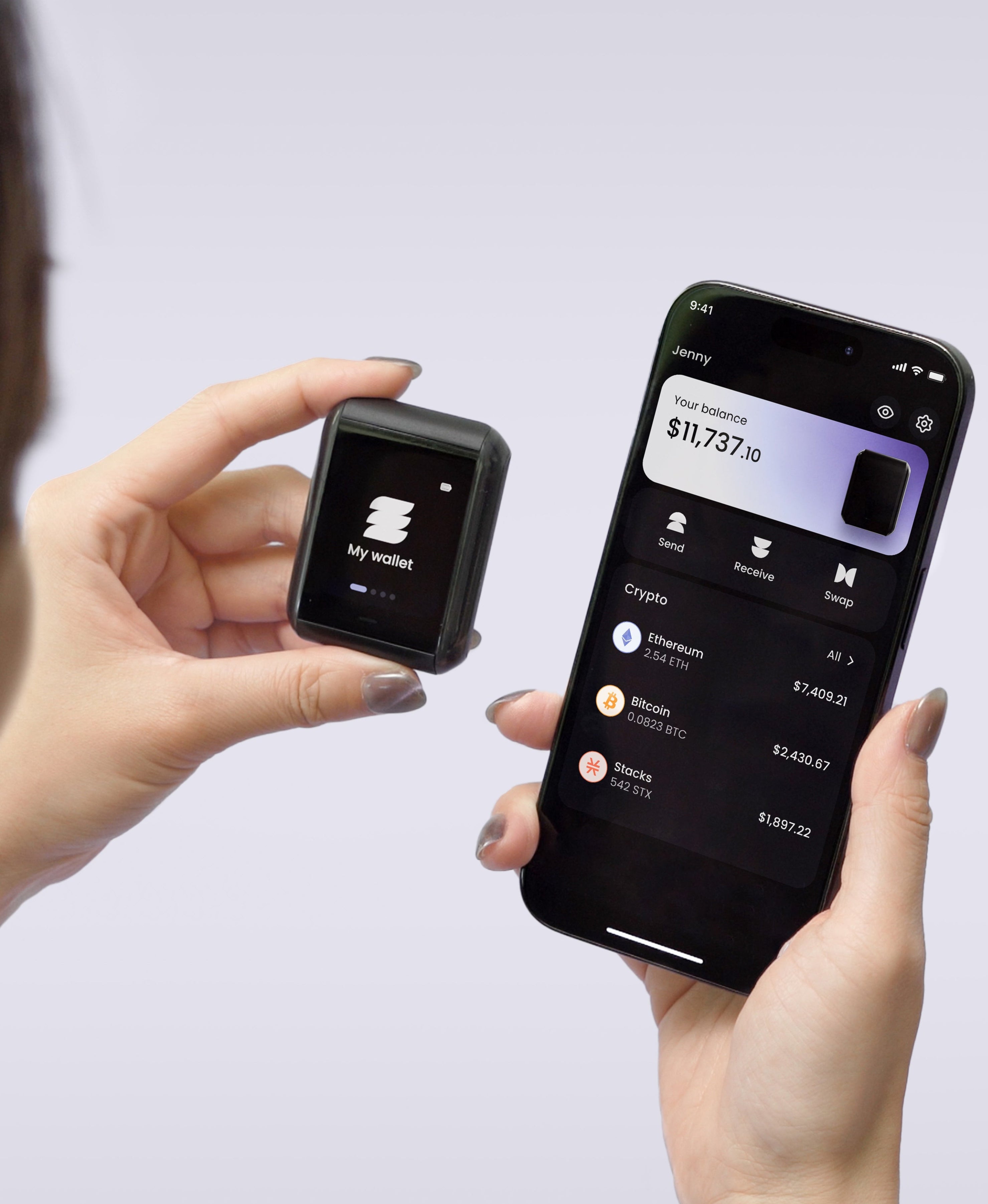
Ryder is the self-custody layer that makes all of this usable for everyone.
Specifically: a hardware wallet that co-signs and approves payments over a user-set mobile limit — so you get the security of cold storage with the convenience of a hot wallet. Lose access to your mobile wallet? Recovery is simple. Your assets stay yours.
We're making three things obsolete:
- Seed phrase anxiety
- Fragmented hardware wallet UX
- The tradeoff between security and convenience


The SAGA phone serves as the hot wallet for fast, low-value transactions — pairing with Solana Pay for speed and Ryder hardware for security. MoonPay gives us the rails to turn this from a roadmap into reality.


The Bitcoin Layer
We're Bitcoin builders at our core, deeply rooted in the Stacks ecosystem.
For the first time in Bitcoin's history, transaction fees are exceeding block rewards — a maturing network signaling real economic activity. But most BTC sits in cold storage, inactive. OGs and whales aren't moving it. That's a DeFi problem waiting to be solved.
To unlock Bitcoin for DeFi, you need: multisig, social recovery, UX improvements, and seamless DeFi integration. That's exactly what we're building — so Bitcoiners can deploy BTC as a productive asset without surrendering self-custody.
The Vision
No bank fees. No chargebacks. No intermediaries. No seed phrase anxiety.
Just a banking experience that happens to run on crypto rails — accessible to anyone with a phone, not just the 2% who already know what a hardware wallet is.
Solana and Bitcoin are the start. As more protocols mature, we'll keep expanding the stack.
We have a multi-year roadmap. We're ready to share it.


Share: