

A platform can describe itself as decentralized while a single company still runs the servers, controls the keys, and decides which transactions go through. Lawmakers have a name for that gap now, and closing it is one of the quieter changes inside the crypto regulation bill heading for a Senate vote on 15 September 2026. The label was never what protected your coins. Working out who holds the switch is the part worth your attention.
What the DINO loophole was
Senator Cynthia Lummis has used the term DINO, decentralized in name only, for services that claim the status without the structure. Her description of the gap is blunt: it "had allowed crypto exchanges, decentralised finance (DeFi) platforms, and crypto ATMs to claim decentralised status" and avoid anti-money-laundering obligations while keeping operational control of the service.
The incentive was obvious. Anti-money-laundering compliance costs money and adds friction, so a business with a governance token and a wrapper of community language could present itself as unownable software while a small team shipped the code, held the admin keys, and collected the fees.
A revision to the CLARITY Act closes that off by extending every part of the digital asset market into the scope of the Bank Secrecy Act and the sanctions framework. Whether a service calls itself decentralized stops being the test, and whether anyone can exercise control becomes the question regulators ask.
The same test works for you
Regulators drawing that line are answering a question you should be asking about anything holding your assets: if one party can stop a transaction, that party can stop yours.
Most people assess a platform on how it markets itself, and the useful check runs the other way. Ask who can change the rules without your consent. Can a team upgrade the contract, pause withdrawals, blacklist an address, or push an update to the frontend that changes where your funds go? An interface you can't modify sitting on a contract someone else can upgrade gives you the experience of self-custody without the substance.
Freezes happen at the asset layer too
Here's the case that surprises people who have already moved to their own wallet. Holding your own keys stops anyone from spending your funds, and it doesn't override the permissions built into the asset itself.
Stablecoins are the clearest example. Tether can blacklist any address holding USDT, and it has done so at scale: roughly 9,597 addresses had been blocked across Ethereum and Tron as of July 2026, covering about 5.69 billion USD in value, with 514.64 million USD frozen across 370 addresses in a single 30-day window earlier in the year. Tether's own newsroom describes coordinating freezes of more than 344 million USD with OFAC and US law enforcement.
Most of that enforcement targets theft, sanctions evasion, and fraud, and the mechanism is worth understanding regardless of how it's used. A dollar-pegged token is an entry on an issuer's ledger, and the issuer keeps the ability to edit it. Bitcoin and ether carry no such switch, which is a structural difference between asset types rather than a difference between wallets.
The practical read: your keys settle who can move an asset, and the asset's design settles whether anyone can freeze it in place. Both matter, and only one of them is under your control.
What the bill leaves alone
Once you follow the control question through the legislation, the shape of it gets clearer. Regulation attaches to parties who exercise control over other people's assets, which is why the DINO fix matters and why the House text separately affirms the right of people in the US to hold and transact with their own digital assets. Section 20216 adds that dormancy cannot be used to declare a self-custodied asset abandoned, with federal preemption over state law.
That is the trade the bill makes. Intermediaries take on supervision, reporting, and sanctions duties. Wallets under your own key sit outside the perimeter, because there's no operator to regulate.
Holding the keys without holding your breath
Self-custody only helps if your setup survives ordinary life, and the standard approach asks a lot: one recovery phrase, written down once, kept somewhere you hope is good enough for a decade.
TapSafe Recovery splits that dependency into pieces. Your Recovery Tag holds 50% of what a restore needs, your paired phone holds the other 50% encrypted into your own iCloud or Google Drive rather than on the handset itself, and optional Recovery Contacts hold 25% each without gaining any view of your wallet. No single piece opens anything alone, and the Recovery Tag is IP69K rated, so pressure, dust, and temperature swings don't end the story. The seed phrase remains on the device as a last resort under the BIP-39 standard, which keeps your exit open.
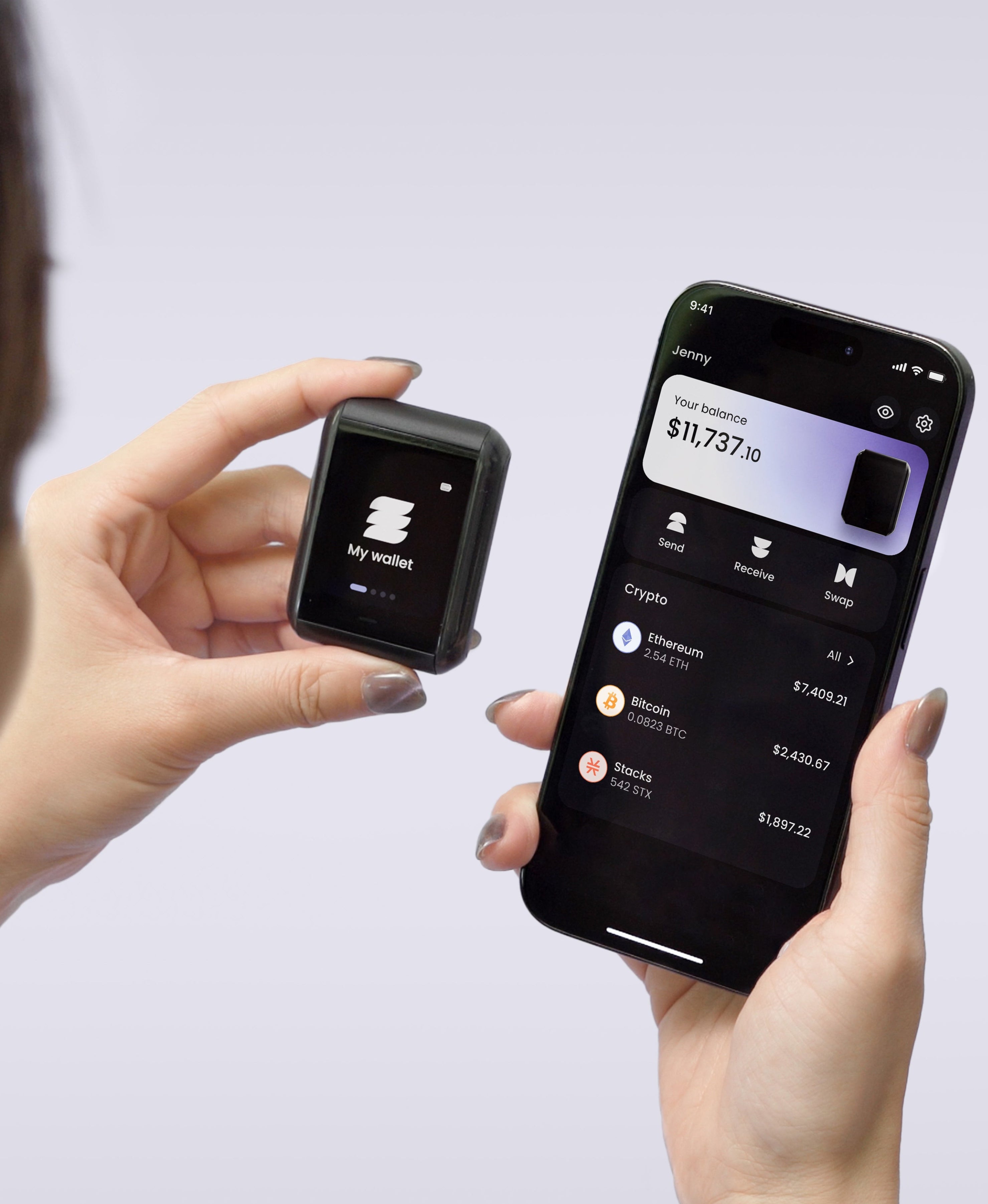
The Ryder One generates keys inside an EAL6+ certified Infineon SLC38 secure element that they never leave, with firmware independently audited by Halborn and the report published openly. Its physical button is wired directly to that secure element, so no software path can sign without a deliberate press, and every transaction renders in full readable detail on the 1.6-inch AMOLED screen. Communication happens over NFC alone. Setup runs three taps in about 60 seconds, and the Starter Combo is 149 USD.
Congress is busy deciding which companies count as operators. You get to decide how many operators stand between you and your coins, and the answer can be none.
Take the operator out of the middle. Get your Ryder One.
Meta description: Crypto regulation is closing the DINO loophole for platforms that are decentralized in name only. How to tell who can freeze your coins, and what keys fix.


Share: