

Search interest in whether a cold wallet can be hacked climbed sharply through 2026, which makes sense given the year. The answer is yes, and the useful version of the answer is a list of how, because the routes that work look nothing like the picture most people have in their head. Nobody is brute-forcing your private key from a basement. The successful attacks on cold storage in 2026 came through a firmware defect, a laboratory bench, a signing screen, and a front door.
We build one of these devices, so we have an interest in how this question gets answered. Here is the version we would give a friend.
The short answer
A cold wallet keeps your private key inside a chip that never connects to the internet, which closes off the entire category of remote theft that empties hot wallets and exchange accounts. That is a large amount of protection and it is why hardware wallets exist. What it does not do is make the key unreachable, because a key still has to be created by software, stored in silicon, used to approve transactions, and backed up somewhere. Each of those four steps is a way in, and each one has been used.
One: a defect in firmware you have no way to inspect
The worst cold storage incident of 2026 needed no attacker anywhere near the device. A build configuration error in Coldcard firmware 4.0.1, shipped in March 2021, caused some devices to fall back on a weak software random number generator instead of the hardware entropy source, cutting effective key strength from 128 bits to as little as 40. TRM Labs documented the result: from 30 July 2026, attackers drained roughly 1,816 BTC, about 116 million USD, from more than 5,200 addresses across four waves.
Every one of those keys was generated offline on dedicated hardware by people following the standard advice correctly. The flaw sat in a code path owners could not see, in a release five years old, and the wallets were weak from the moment they were created. This is the attack class that should worry you most, because your own discipline offers no defence against it. What helps is choosing a maker whose firmware gets independently audited with the report published in full, and staying current on releases.
Two: the chip itself, with the device in someone's hands
Secure element chips are built to resist people who have the hardware on a bench, and the resistance is measurable rather than absolute. In June 2026, Ledger's in-house research team Donjon disclosed a successful laser fault injection attack against the TROPIC01 secure element used in the Trezor Safe 7. Tropic Square then built on the finding to extract one further secret touching the chip's PIN functions. Trezor's response stated that funds, PINs and wallet backups remain protected, and that no Safe 7 has been compromised in the field.
The practical read is that this route needs the device itself, laboratory equipment and specialist expertise, which puts it out of reach of whoever might steal a wallet from a hotel room. It matters anyway for two reasons. A silicon-level weakness cannot be patched by a firmware update, and certification level is one of the few things you can compare across products before buying. Ryder One uses an EAL6+ certified Infineon SLC38 where keys are generated inside the chip and never leave it, and the firmware has been audited by Halborn with the full report public.
Three: you approve something that is not what you think
This is the route that empties the most self-custodied wallets, and calling it a hack stretches the word. The key is never stolen. The owner is persuaded to sign, and the signature does the rest.
Older devices with small screens could not display transaction detail in readable form, so owners approved a hash and hoped. A token approval granted to a malicious contract can hand over an unlimited spending allowance in one confirmation. Clipboard malware swaps the destination address between the copy and the paste, so the coins go somewhere else entirely while everything on your laptop looks correct. In each case the hardware performed exactly as designed.
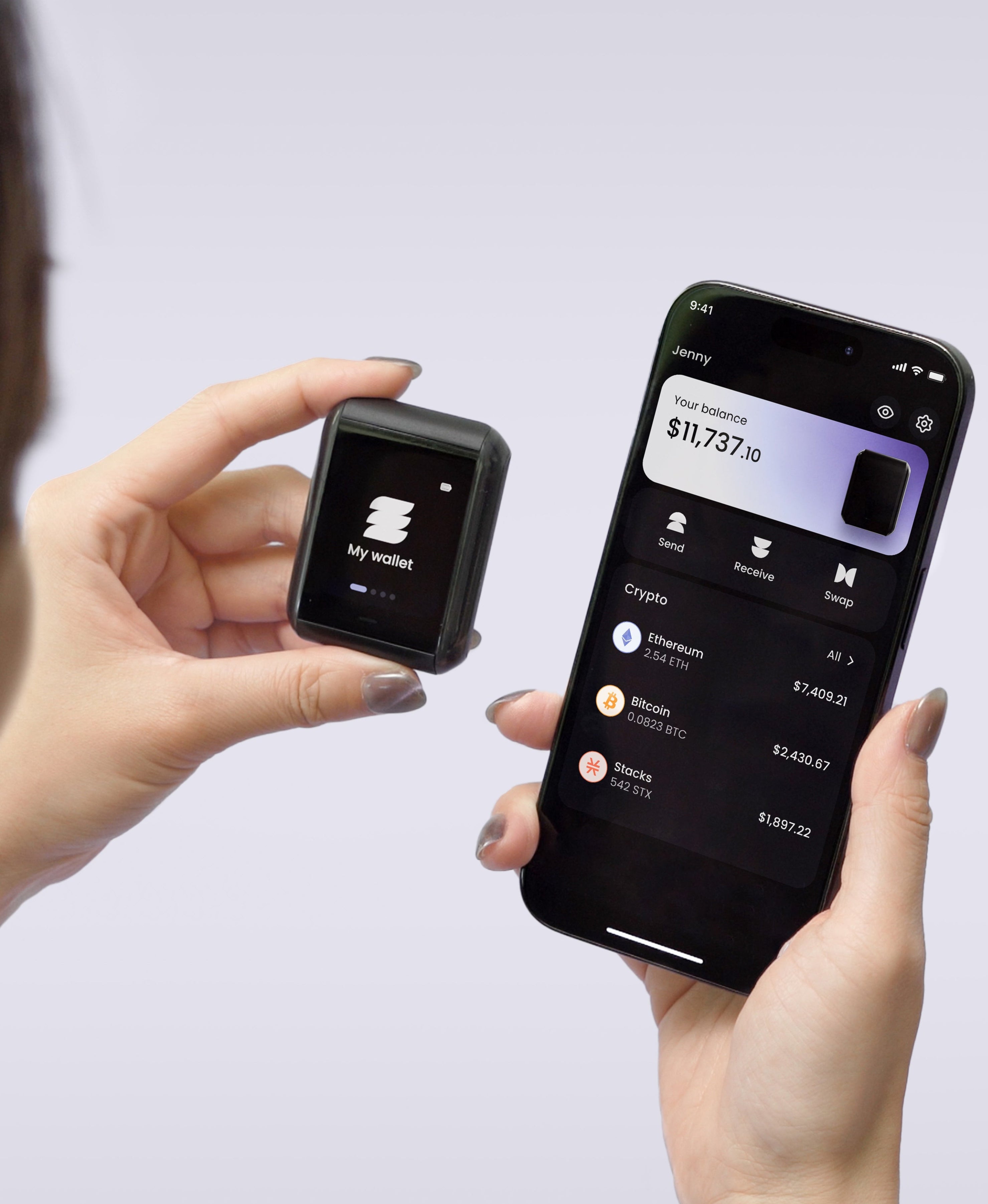
The defence is a device that shows you the whole transaction in terms you can read before you confirm. Every Ryder One transaction appears in full on the 1.6-inch AMOLED touchscreen, receive addresses can be verified on the device itself to defeat address substitution, and the confirmation button is wired directly to the secure element so no software path can sign without a press.
Four: somebody comes for the owner
Cryptography holds up well and people are easier. Physical coercion attacks rose through 2026, and they track leaked customer data closely, because a breached database that pairs a home address with an estimate of holdings produces a target list. The Ledger customer data leak of 2020 still generates threatening letters six years on, and the Revolut disclosure in September 2026 put identity documents, account statements and Bitcoin transaction history into the hands of people who appear to have been shopping for exactly this.
No chip helps here. What helps is being quieter about what you hold, and structuring recovery so that nobody standing in your kitchen can be handed everything at once.
What a cold wallet hack never looks like
Worth stating clearly, because the fear is usually pointed at the wrong thing. Your key is not going to be guessed: the number of possible keys is large enough that brute force is not a strategy anyone attempts. An offline device cannot be reached over the internet while it is offline. A wallet sitting in a drawer does not get drained because a blockchain was congested or an exchange failed.
The threats that work are specific, and three of the four above involve the owner doing something ordinary at the moment the trap closes.
The failure that beats all four
More crypto is lost to nobody than to attackers. There is no incident report when a recovery card goes out with the recycling, no press release when a house fire takes the drawer it was in, no investigation when the person who knew where it was kept dies without telling anyone. The standard advice is paper, then metal once the amount justifies the trouble, and stamped steel is a solid upgrade because it survives water and heat. Your recovery still hangs on one item that has to make it through every scenario, including a burglary at an address that may already have leaked.
TapSafe Recovery removes that single point of failure instead of hardening it. The recovery is split, with a Recovery Tag carrying 50% and your paired phone carrying the other 50%, stored encrypted in your iCloud or Google Drive rather than on the handset, so a lost phone costs you nothing. Optional Recovery Contacts hold 25% each and can see no wallet information at all. Underneath it is a custom implementation of Shamir's Secret Sharing, and your seed phrase stays available on the device as a last resort on the BIP-39 standard, so you are never locked to our hardware.
So should you use one
Yes. Asking whether a cold wallet can be hacked is the right question and it has the wrong shape, because the comparison that matters is against the alternative rather than against perfection. Leaving coins on an exchange exposes you to every route above plus insolvency, a frozen withdrawal queue and a support desk that can be socially engineered. Cold storage closes the remote attack surface almost entirely and leaves you with a shorter list of risks you can work on: buy from the manufacturer, keep firmware current, read every transaction before approving it, talk less about your holdings, and split your recovery so one lost object cannot end the story.
Ready to cut the list down? Get your Ryder One for 149 USD.
Meta description: Can a cold wallet be hacked? Yes, in four specific ways, from firmware defects to laser fault injection. What each one takes, and which one to worry about.
Target keyword: can a cold wallet be hacked



Share: