

A BIP-39 passphrase is an optional second secret that sits on top of your twelve or twenty-four words and decides which wallet those words open. People call it the 25th word, though it behaves nothing like the other twenty-four. Add one and you land in a different wallet with different addresses and a different balance; take it away and you are back where you started. That single property makes it the most powerful setting on a hardware wallet, and the fastest way to lose access to everything you own.
How a BIP-39 passphrase changes your seed
The words you wrote down are not your keys. They are one input to a key-stretching function, and the passphrase is the other. BIP-39 specifies PBKDF2 with HMAC-SHA512 over 2,048 iterations, using your mnemonic sentence as the password and the string "mnemonic" plus your passphrase as the salt. Out comes a 512-bit seed, and every key in your wallet descends from that number.
Change one character of the passphrase and the salt changes, which changes the seed, which changes every address the wallet will ever derive. There is no partial credit here and no near miss. A passphrase of "Correct" and a passphrase of "correct" open two wallets with no relationship to each other whatsoever.
Every passphrase opens a valid wallet
This is the part that catches people out. The specification is explicit that every passphrase generates a valid seed and therefore a working hardware wallet, and only the intended one makes the wallet you were looking for available. Your device cannot warn you that you mistyped, because in the mathematics there is no such thing as a wrong passphrase.
So a typo does not produce an error. It produces a clean, working wallet with a zero balance and no transaction history, which looks identical to the wallet of someone who has never received a coin in their life. The practical consequence is that you have to test a new passphrase deliberately: send a small amount in, wipe the device, restore from your words plus the passphrase, and confirm the money reappears before you trust it with anything larger.
What a hidden wallet buys you
The design intent is plausible deniability. Somebody who finds your written words, whether that is an intruder in your house or a person applying pressure in a hotel room, can restore what those words open and nothing beyond it. Keep a modest balance on the bare seed and the bulk behind a passphrase, and a coerced restore reveals the modest balance.
Trezor ships this as a hidden wallet and Ledger exposes it under advanced settings, both built on the same BIP-39 mechanism, which means a passphrase set up on one brand's device restores correctly on another's. That portability matters more than it sounds: your escape route from any single manufacturer runs through the standard, so a passphrase does not lock you in any further than the words already do.
The failure mode that takes everything
Forgetting a passphrase has no equivalent in ordinary online life. A lost email password has a support desk behind it. A forgotten passphrase leaves your coins sitting on the chain in plain view, indefinitely, with nobody alive able to produce a signature that moves them.
The ways people lose one are mundane. They put the twenty-four words in a fireproof safe and keep the passphrase only in their head, and then eighteen months go by without a restore. Or they remember the phrase but not its capitalisation, or they remember a trailing space they can no longer be sure about, or a phone keyboard autocapitalised the first letter during setup and nobody noticed. Since no combination of characters ever reports itself as incorrect, none of these mistakes announce themselves at the moment they are made.
Where this leaves your backup
A passphrase does not solve the problem of protecting your words. It adds a second secret that has to outlive you alongside them, plus a requirement that the two be kept apart, because a drawer holding both hands an intruder the entire wallet in one find.
Paper does neither job well. Steel plates are the standard upgrade and they answer fire and flooding properly, though they leave the underlying shape of the risk untouched: one object that grants full access to whoever reads it, and complete loss to you if it disappears. Stamping a passphrase onto a second plate just doubles the number of objects you have to track for the rest of your life.
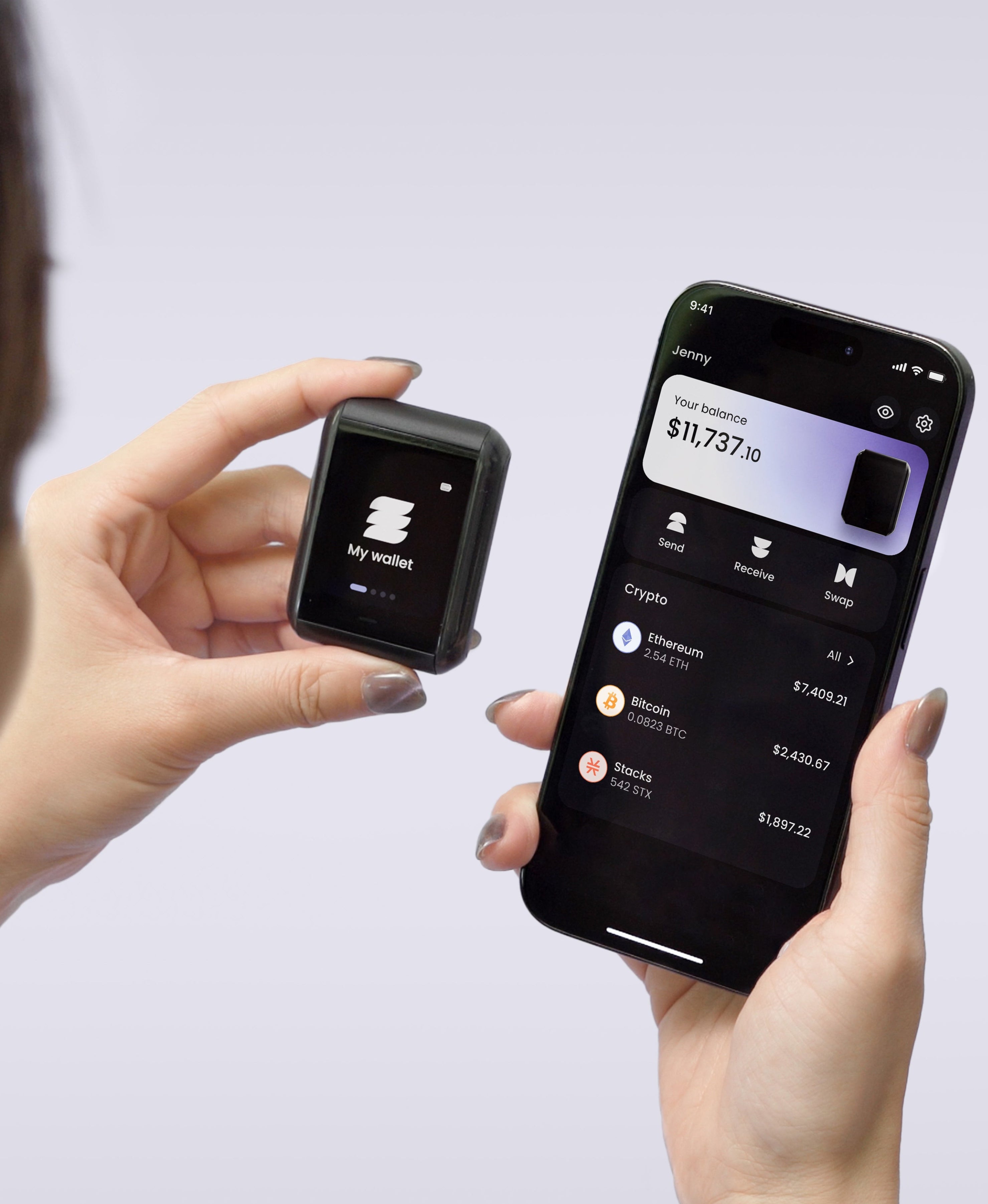
TapSafe Recovery splits the backup instead, so that no single item carries it. The Recovery Tag holds half. Your paired phone holds the other half, encrypted in your own iCloud or Google Drive rather than on the handset itself, so a lost phone does not cost you the share. Together the two restore the wallet, and on its own neither one discloses anything. Optional Recovery Contacts hold a quarter share each and can see nothing about your balances. Your seed phrase stays reachable on the device as a last resort under BIP-39, so the door to other hardware is always open.
Who should switch it on
If you hold an amount whose loss would change your circumstances, and you already keep secrets in a system that has worked for you over years rather than months, a passphrase puts a wall in front of a thief who has your words. The wall holds.
For somebody setting up a first wallet, it introduces a single point of failure they have no practice managing yet, and the better move is to get the basics solid before adding a secret that erases the wallet when memory fails. There is no prize for turning on every setting. The people who use passphrases well are the ones who wrote down a plan before they wrote down a phrase.
The short version
A BIP-39 passphrase is a second secret that selects which wallet your words open. It cannot be verified, it cannot be reset, and every typo drops you into a functioning wallet that happens to be empty. Design around it, or leave it alone.
Ryder One is 149 USD for the Starter Combo. Private keys are generated inside an EAL6+ certified Infineon SLC38 secure element and never leave the chip, the device speaks NFC only with no Bluetooth, no Wi-Fi and no USB data path, and the firmware has been audited by Halborn with the full report published. Setup runs about sixty seconds.
Meta description: A BIP-39 passphrase is a 25th word that opens a different wallet. How it derives, why no typo is ever reported, and what it costs to forget.


Share: