

Searches for a 12 word seed phrase generator have climbed sharply through 2026, and the people running them want two different things. Some are trying to understand where those twelve words come from before they trust a device with their savings. Others are hoping a website will hand them a phrase that already has coins sitting behind it, which is a scam we have written about at length. This piece is for the first group, because understanding how a phrase is made is the fastest way to see why where it is made matters so much.
What those twelve words are
A recovery phrase is a number wearing a costume. Under the BIP-39 standard, your wallet starts with 128 bits of randomness, adds a 4-bit checksum derived from a SHA-256 hash of that randomness, and slices the resulting 132 bits into eleven-bit chunks. Each chunk points at one entry in a fixed list of 2,048 words, which is where the twelve come from.
The words exist because humans copy numbers badly. Reading out "abandon ability able" over the phone to yourself is less error-prone than transcribing 32 hexadecimal characters, and the checksum means a wallet can tell you immediately if you have written one of them down wrong. From there the phrase runs through 2,048 rounds of PBKDF2 with HMAC-SHA512 to produce a 512-bit seed, and every address you will ever own descends from that one number.
Everything rests on the randomness
Because the words are a readable form of the starting number, the security of your entire wallet is the quality of that number and nothing else. With a properly generated 128 bits, there are roughly 340 undecillion possibilities, and no amount of computing power gets through a space that size before the sun burns out.
The catch is that "properly generated" is doing enormous work in that sentence. Randomness on a computer is difficult, and software pseudo-random generators produce sequences that look random while being entirely reproducible if you know how they were seeded. A good hardware wallet avoids the problem by using a dedicated hardware random number generator inside its secure element, sampling electrical noise that cannot be predicted or replayed. A browser tab has no such component and no way to prove what it used.
When the randomness fails, the words do not save you
This is not hypothetical, and 2026 supplied the demonstration. A build configuration mistake in Coldcard firmware from March 2021 caused seed generation to fall back on a software random number generator instead of the device's hardware source, collapsing the effective strength of new wallets far below the 128 bits their owners believed they had.
Nothing looked wrong. Owners got twelve valid words, wrote them on the card that came in the box, and stored them properly. Five years later somebody worked out that the flawed path was reproducible, regenerated candidate seeds offline until one matched a funded address, and started emptying wallets. TRM Labs put confirmed losses above 115 million USD through mid-August 2026, with private reconciliation among victims suggesting the true figure runs higher.
The lesson is narrow and worth holding onto. A phrase you protect perfectly is worth nothing if the number behind it was weak on the day it was created, and there is no way to inspect your own phrase afterwards and tell.
Should you use a 12 word seed phrase generator on a website
No, and the reason is simpler than the mathematics above. A web page that generates a phrase has that phrase in memory on a machine you do not control, and you have no way to know whether it was logged, transmitted, or derived from a value the operator can reproduce later. Reputable open-source tools like Ian Coleman's BIP-39 page are useful for learning and for offline testing, and they remain the wrong place to create a phrase you intend to fund.
The same applies with more force to anything that asks you to type an existing phrase in to "check a balance" or "verify" it. There is no legitimate reason for that request to exist. If a site, an app, a support agent, or a message asks for your recovery words, the transaction being proposed is your wallet for nothing, whatever the framing. This holds for our own recovery system too: no part of setting up or restoring with TapSafe involves typing your words into anything connected to the internet.
What good generation looks like
Generate the phrase on a device whose only job is holding keys, and confirm the device shows you the words on its own screen rather than sending them to a phone or a laptop to display. Check that the chip has a certification you can look up, since EAL levels are audited by outside labs and published rather than self-declared. Look for firmware that somebody independent has examined and reported on in public.
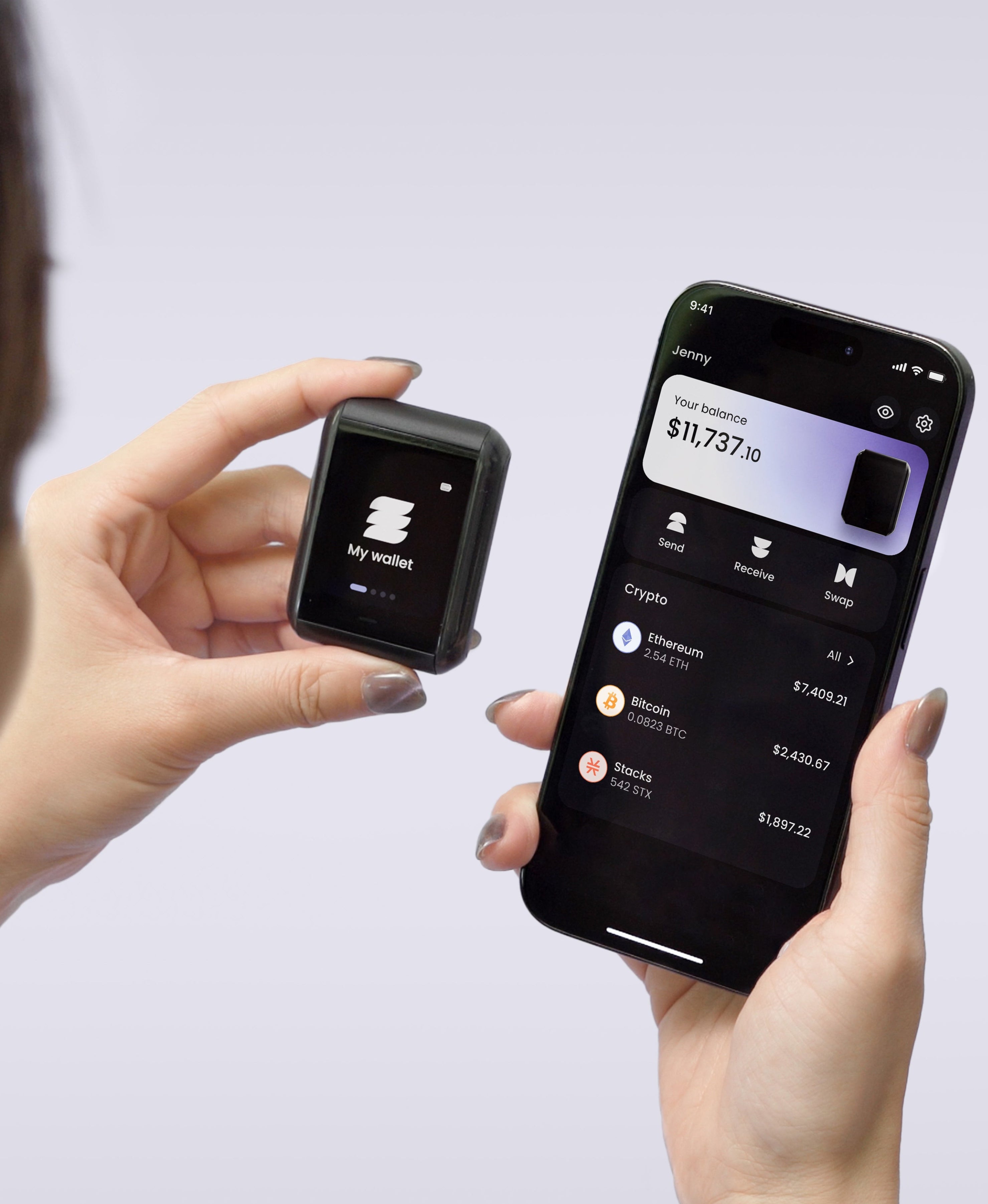
On the Ryder One, keys are generated inside an EAL6+ certified Infineon SLC38 secure element and never leave the chip, and the firmware was audited by Halborn with the full report published rather than summarized. Nothing about the process runs on your computer, because the wallet communicates over NFC and has no other data channel.
After the phrase exists, the problem changes shape
Generation is the first half. The second half is that you now hold twelve words which restore everything to anyone who reads them, and most of the ways people lose crypto happen here rather than at the chip. Paper burns, floods, and gets thrown out by someone tidying a drawer. Metal plates survive all three and still leave you with one object that carries complete access, so a burglary, a coerced conversation, or a curious relative ends the same way.
We built TapSafe Recovery to remove that single point of failure. Recovery splits across a Recovery Tag holding 50 percent, your paired phone holding 50 percent stored encrypted in your own iCloud or Google Drive rather than on the handset, and optional Recovery Contacts holding 25 percent each while learning nothing about your holdings. Tag plus phone restores the wallet, and neither piece on its own restores anything. Your seed phrase remains available on the device as a last resort under BIP-39, so you keep the option to walk away to another wallet whenever you want.
Where to start
If you are researching how phrases are made, you are already ahead of most buyers, and the practical version of what you have learned is short. Let a certified chip create the number, never let a website near it, and then make sure the backup that protects it does not live in one place that one accident or one visitor can reach.
Setup on the Ryder One takes about 60 seconds, the box includes the Recovery Tag, a Qi wireless charger and a pouch, and the Starter Combo is 149 USD. Start with the Ryder One.
Meta description: Looking for a 12 word seed phrase generator? Here is how BIP-39 makes those words, why website generators are unsafe, and what the Coldcard failure proved.


Share: