A New York lawsuit filed on May 24, 2026 is asking a court to declare 39,069 dormant Bitcoin wallets, holding roughly 3.7 million BTC worth around 285 billion USD, as legally "abandoned property." Some of those wallets sit at addresses linked to Satoshi Nakamoto and the Mt. Gox hacker. The plaintiff, identified only as Noah Doe, wants ownership transferred under traditional abandoned-property law.
If the court accepts the framing, the precedent could ripple across every dormant address on every chain. If the court rejects it, the filing still raises questions self-custody holders should answer for their own wallets. Either way, the case is the first time a US court has been asked to apply abandoned-property doctrine directly to Bitcoin held in self-custody.
This piece walks through what the lawsuit is asking for, why dormant wallets sit in a legal grey zone, and what the realistic implications are for anyone holding Bitcoin on their own keys.
What the lawsuit is asking for
Abandoned-property law (often called escheatment) is the doctrine that lets the state claim unclaimed assets after a defined dormancy period. Bank accounts, uncashed checks, safety-deposit boxes, life-insurance payouts: when these sit untouched long enough, the state takes custody and lists them for the rightful owner to claim. Most US states define dormancy as three to five years for financial assets.
The Noah Doe filing applies that framework to Bitcoin. The argument is that wallets which haven't transacted in years should be treated the same as a dormant bank account: the holder has either lost access, died without heirs, or chosen to walk away, and the law should let someone else claim them through a formal process. The complaint specifically cites 39,069 addresses holding roughly 3.7 million BTC, including the early Satoshi-era addresses that have sat untouched since 2010 or 2011.
The plaintiff isn't asking the court to physically move the coins. The court can't sign transactions. What the filing seeks is a legal declaration of ownership transfer, after which the plaintiff would presumably argue the original holders have no standing to dispute it. The physical Bitcoin would stay on-chain at the original address, but the legal owner under US property law would be Noah Doe.
Why this argument has legs and why it doesn't
The argument has some structural weight. Traditional abandoned-property doctrine doesn't require the state to physically possess the asset before declaring it abandoned. The doctrine works through court orders that override the absent owner's rights, and there's no obvious reason that mechanism couldn't apply to Bitcoin in principle.
The argument also runs into Bitcoin-specific problems the lawsuit doesn't resolve: the blockchain doesn't recognize court orders. Even if a US court declared Noah Doe the legal owner of 3.7 million BTC, the coins remain inaccessible without the private keys, and the private keys still sit with whoever holds them. The original owners (if alive) could move the coins at any time, which would moot the court's declaration in practical terms. The court order would be a legal title to assets the legal owner can't access.
There's also a jurisdictional question. Bitcoin addresses don't live in New York. They live on a distributed ledger maintained by nodes all over the world. A US court declaring legal ownership of a Bitcoin address has roughly the same enforcement power as declaring legal ownership of a star, unless and until the holder of the private key brings the coins into a jurisdiction the court can reach.
For addresses with active private keys held by living owners who are paying attention, the filing is mostly a curiosity. For the addresses that have been abandoned because the keys are lost forever (or because the holder died without leaving access for heirs), the filing surfaces a question Bitcoin has avoided answering for fifteen years: what happens to truly lost coins?
What this means if you self-custody
Most self-custody holders watching this case don't have 100,000 BTC sitting on a 2010 address. The realistic concern for ordinary holders is different. Three concrete worries deserve attention, regardless of whether a court ever rules on Noah Doe specifically.
The first is inheritance. If you die without leaving a recovery path, your wallet looks identical on-chain to a wallet whose owner walked away. Heirs trying to recover access have to prove they're rightful claimants in a legal system without an established way to handle private keys, and a clean inheritance plan keeps the wallet from drifting into the dormancy pool.
Multi-year cold storage carries a related risk. Holders who don't touch their Bitcoin for years are creating wallets that look dormant by every external metric, and the lawsuit's argument explicitly targets this profile. Whether or not the court accepts the framing, the strategy of holding without touching for a decade deserves a periodic check-in.
Access loss without an inheritance backup is the third concern, and it's where the case bites hardest. Lose your seed phrase paper, your hardware wallet, and the device they were on, and the wallet becomes legitimately abandoned. From the outside, the on-chain record looks identical to a wallet whose owner is still around. A backup model that survives the most common loss events keeps the wallet from drifting into a grey zone the law might decide to address.
The structural answer: backup design that survives
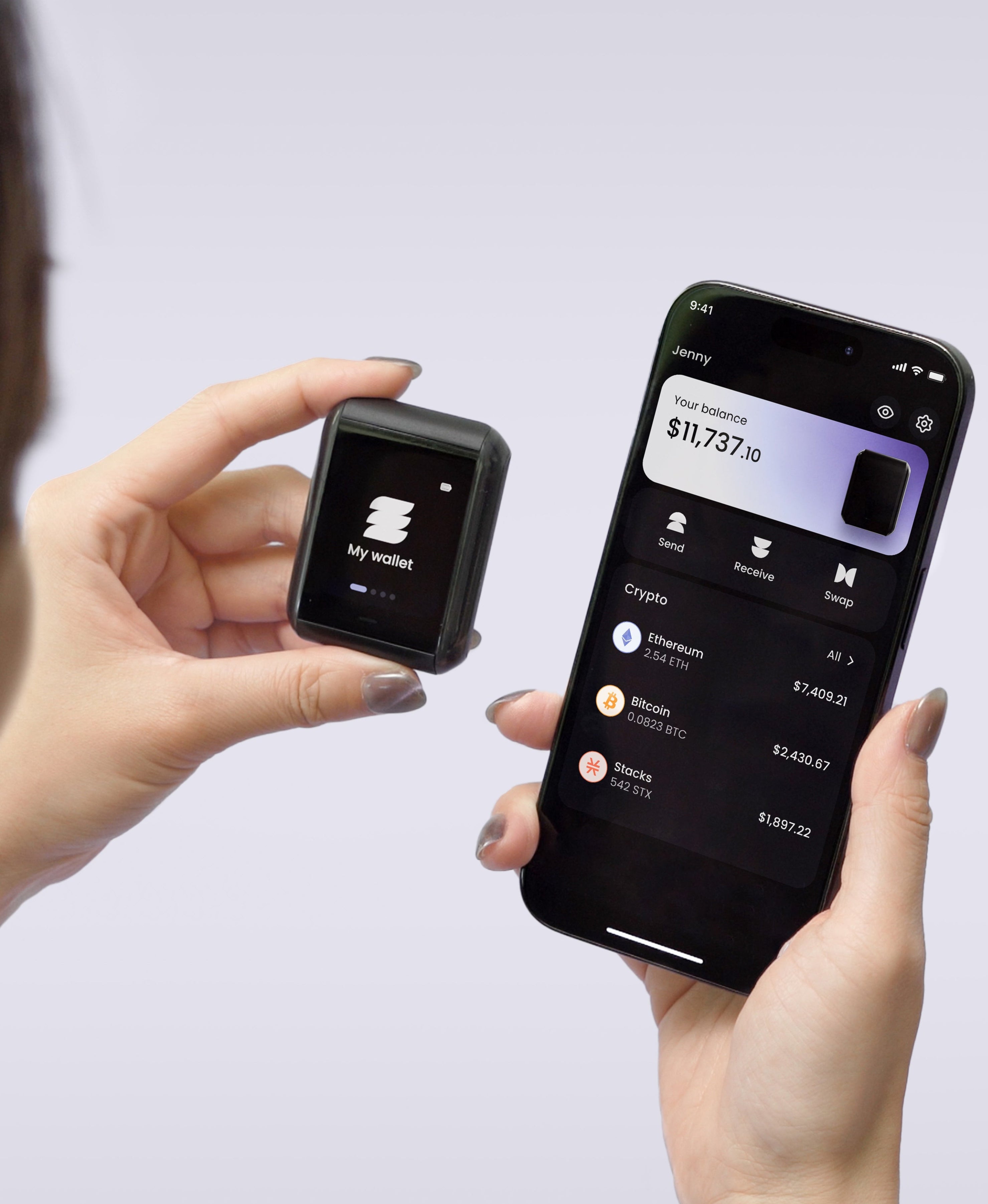
TapSafe Recovery on Ryder One is designed for the exact failure modes the Noah Doe filing exploits. The recovery is split across three independent layers: 50% on the Recovery Tag (battery-free, NFC, IP69K rated, built to outlast the device), 50% encrypted in your phone's iCloud or Google Drive backup (so losing the phone doesn't lose the backup), and an optional 25% per Recovery Contact for the people you trust to participate in recovery if you can't sign yourself.
No single component on its own gives anyone access during your lifetime. No single failure (fire, lost phone, dead Tag, missing seed paper) takes the wallet down. And because Recovery Contacts can together reconstruct the wallet without needing the lawyer, the safe, or the court to be involved, the wallet stays in the chain of custody you designed.
The seed phrase remains accessible on the device as a last resort and meets the BIP-39 standard, so the user is never locked into Ryder hardware. The firmware is independently audited by Halborn, with the audit report public.
What to watch in the case
The court will likely take months to rule. The substantive questions the judge will have to answer are unsettled, including whether US property law can attach to a blockchain asset at all, whether a court order against the dormant Bitcoin addresses is enforceable in any meaningful sense, and what the legal status of the original holder is if they reappear. Each one could become its own precedent.
The most likely outcome is a narrow ruling that doesn't transfer ownership but also doesn't dismiss the doctrine, leaving the question open for future filings. The second most likely outcome is dismissal on jurisdictional grounds. The least likely outcome (but most consequential) is a ruling that treats Bitcoin as escheatable property, which would invite a flood of similar filings against any address that looked dormant.
For self-custody holders, none of those outcomes change what you should be doing today. The case is a reminder that "hold and forget" carries legal as well as technical risk, and that the most reliable defense against both is a backup model built to outlast you.
The bottom line
The Noah Doe lawsuit asks a US court to do something the blockchain wasn't designed to allow: reassign Bitcoin through legal process. Whether or not the court accepts the framing, the case puts a useful question to self-custody holders. The blockchain doesn't distinguish between a wallet whose owner is still alive and waiting and a wallet whose owner has been gone for a decade. The legal system might start drawing that distinction in ways holders haven't planned for.
If you're sitting on Bitcoin you intend to hold long-term, the practical takeaway is to build the chain of custody now: an inheritance plan documented, recovery material split across people and devices you trust, and backups stored in places that survive the most common loss events. The wallet should stay on a path you designed, with recovery handled by the people you chose, on hardware you control.
Plan for the long hold. Ryder One with TapSafe Recovery splits your wallet backup across hardware and people you trust, so the wallet stays in your chain of custody whether you sign tomorrow or in 2046. See how it works.


Share: