In 2020, MicroStrategy (since renamed Strategy) bought 21,454 Bitcoin for 250 million USD and started writing earnings reports that talked about Bitcoin as a balance sheet asset. As of May 2026, Strategy holds more than 815,000 BTC, and its reserves account for over 60% of all Bitcoin held by publicly traded companies worldwide. Dozens of other firms have followed, including Metaplanet, which crossed 40,000 BTC by April 2026, Twenty One Capital, and Marathon Digital. The term "Bitcoin treasury company" has become a category of its own.
For individual holders watching from the sidelines, two questions come up. Is the corporate adoption a sign of durable institutional change, or is it a top-tick indicator? And the more interesting one: how do these companies hold their Bitcoin in practice, and is that something a retail holder can match?
This piece walks through what a Bitcoin treasury company is, how the leading ones custody their holdings, and what retail self-custody looks like when measured against treasury-grade practice.
What a Bitcoin treasury company is
A Bitcoin treasury company is a publicly traded firm that holds Bitcoin as a significant portion of its balance sheet, usually as a replacement for or supplement to cash reserves. Some run other operating businesses alongside the treasury (Tesla, GameStop, MetaPlanet). Some have effectively converted into pure-play BTC vehicles where the operating business is incidental (Strategy is the cleanest example).
The structure usually looks like this. The company issues debt or equity to raise dollars, then uses those dollars to buy Bitcoin on open markets, OTC desks, or through structured deals. From there the Bitcoin sits in custody, the holdings appear in quarterly filings, and the appreciation gets treated as a corporate asset under current mark-to-market accounting rules.
The playbook works because public-company shareholders gain Bitcoin exposure without each one having to figure out custody themselves. The company does the operational lift; shareholders get the price exposure. For investors in tax-advantaged accounts or jurisdictions where direct BTC ownership is awkward, this can be more accessible than buying spot.
How the leading ones custody their Bitcoin
This is the part most public coverage skips. The companies holding the largest Bitcoin treasuries almost all outsource custody to specialized providers. The dominant institutional names in the space are Coinbase Custody Trust, BitGo Trust, Fidelity Digital Assets, and Gemini Custody, and most large corporate holders have at least one of these named in their 10-K under custody arrangements. A smaller group runs hybrid setups that combine their own multisig structures with an institutional custodian.
The reasons for outsourcing are practical. Custodians carry crime insurance that covers specified loss scenarios, which a company's own multisig setup would have to arrange separately or self-insure. Public-company finance teams also need a documented audit trail, which institutional custodians produce as a normal part of the service. And qualified custody structures keep the BTC legally separate from the company's general balance sheet, which matters under bankruptcy and tax law.
The trade-off is the one self-custody holders already know. The Bitcoin sitting in Coinbase Custody is on Coinbase's books in a legal sense, even if it's segregated. If Coinbase as an institution failed, recovery would run through bankruptcy proceedings, and insurance policies cover specific scenarios rather than the full risk surface. The companies running their own multisig setups accept higher operational complexity to remove the custodian as a counterparty entirely.
The split between institutional and self-custodial treasuries
There's a difference between a company that holds Bitcoin in custody with a regulated provider and a company that runs its own keys. The first is the more common pattern. The second describes what some Bitcoin-native firms (small mining companies, some long-tail public companies, several private holders) do in practice.
The self-custodial public-company model usually looks like this: a multisig structure with 3-of-5 or 4-of-7 keys, split across geographically distributed signers (often a mix of executives and external counsel), with one or more hardware wallets per signer, and a defined recovery procedure documented internally. Some companies publish the high-level architecture in their financial reports; most don't.
The security model is the same one a thoughtful retail holder uses: keys offline, signature verification on dedicated hardware, no single point of failure, with the recovery distributed across people and devices.
What this means for retail holders
The interesting observation is that the security architecture a public company uses for self-custody isn't fundamentally different from what a retail holder can set up. The differences are operational scale, insurance, audit, and the headcount needed to maintain the procedures. The cryptographic and hardware components are the same.
For a retail holder, the path to treasury-grade self-custody isn't expensive. It's a hardware wallet on a certified secure element, a documented recovery procedure, and a backup model that doesn't depend on a single object surviving every move and disaster between now and the day you need it.
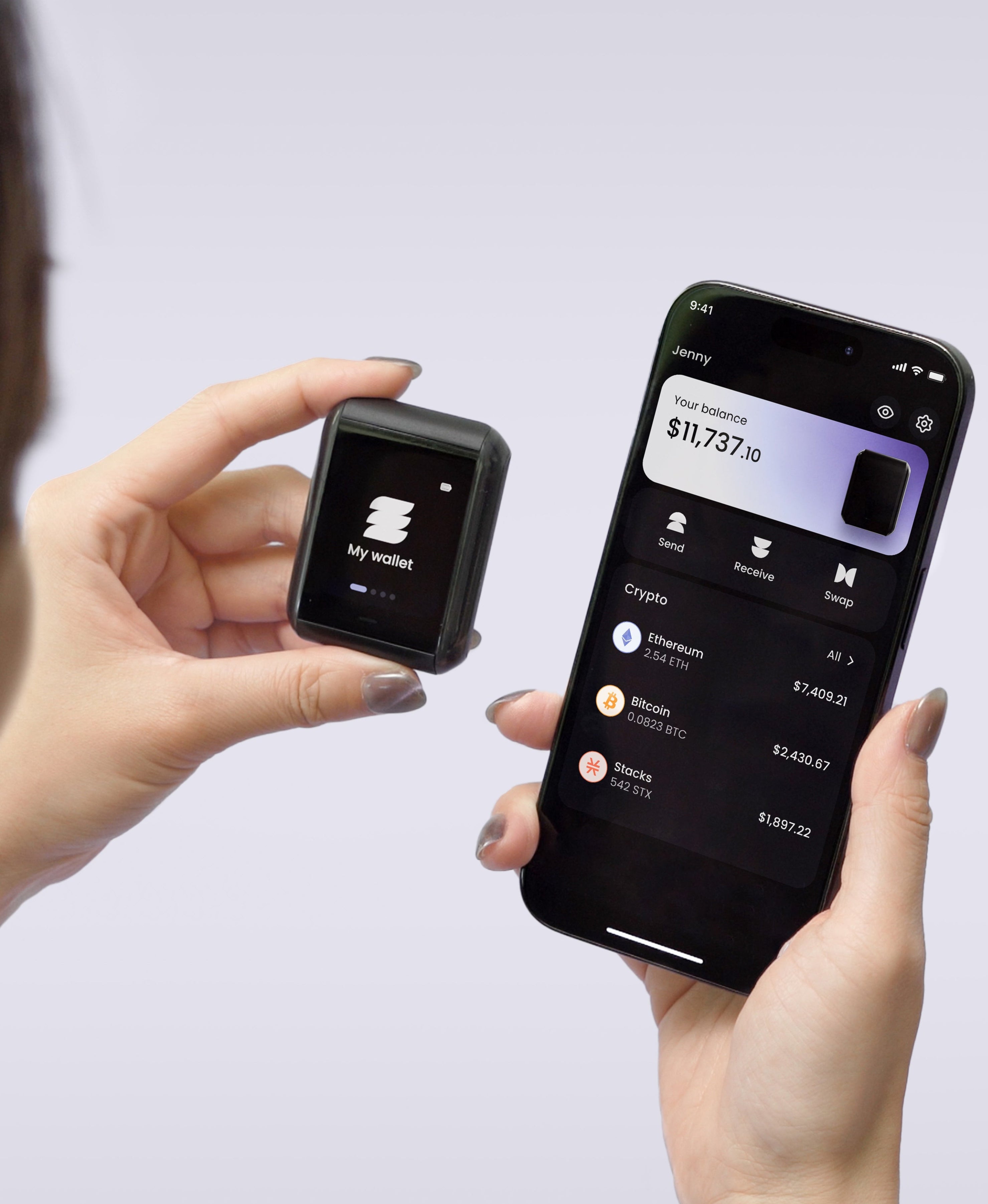
Ryder One uses an EAL6+ certified Infineon SLC38 secure element, the same family of certification level used in institutional-grade hardware. The firmware is independently audited by Halborn, with the audit report public. TapSafe Recovery handles the operational redundancy that a corporate treasury would otherwise pay a custodian for: 50% on the Recovery Tag (battery-free, NFC, IP69K rated), 50% encrypted in your phone's iCloud or Google Drive backup, optional 25% per Recovery Contact for the people you trust.
A retail holder using this setup matches Strategy's security primitives at retail scale, with neither the custody fees nor the institutional dependency that come with the corporate version.
What to watch in the treasury-company trend
Three things worth tracking for individual holders.
Custodian concentration: If most of the corporate-held BTC sits at three or four custodians, the systemic risk from any single custodian's failure grows over time. The question for the retail holder is whether you want to be in the same line of creditors as a public company if that custodian ever fails.Treasury company financial engineering: Some treasury companies issue convertible notes, preferred shares, and other structured instruments to fund Bitcoin purchases. The economics of these are sometimes great for the company, sometimes thin. For a retail holder buying the stock instead of the underlying, the financial engineering becomes part of what you're investing in.The retail-to-treasury parallel: When you read a 10-K describing the company's custody setup, mentally substitute "my hardware wallet" and "my recovery procedure" for the custodian and the audit firm. Most of the architecture has retail equivalents. The companies that don't have a custody answer in their filings are running the same self-custody you can.
The bottom line
Bitcoin treasury companies are a significant trend, both as a signal of institutional Bitcoin adoption and as a lesson in how large holders custody substantial positions. Most outsource to specialized custodians. A smaller number run their own keys with documented multisig setups. The architecture they use is available at retail scale, on hardware wallets that have been audited to the same general standard, with recovery models that distribute trust the same way.
If the rise of corporate Bitcoin treasuries makes you think about your own holdings, the useful takeaway runs through the underlying security model rather than the custodial path. Offline keys, hardware signing, and distributed recovery translate directly to retail scale, with none of the custody fees most treasuries pay.
Bring treasury-grade security to your own wallet. Ryder One gives you the same offline-key, hardware-signed architecture institutional holders use, with TapSafe Recovery as built-in operational redundancy. See how it works.


Share: